
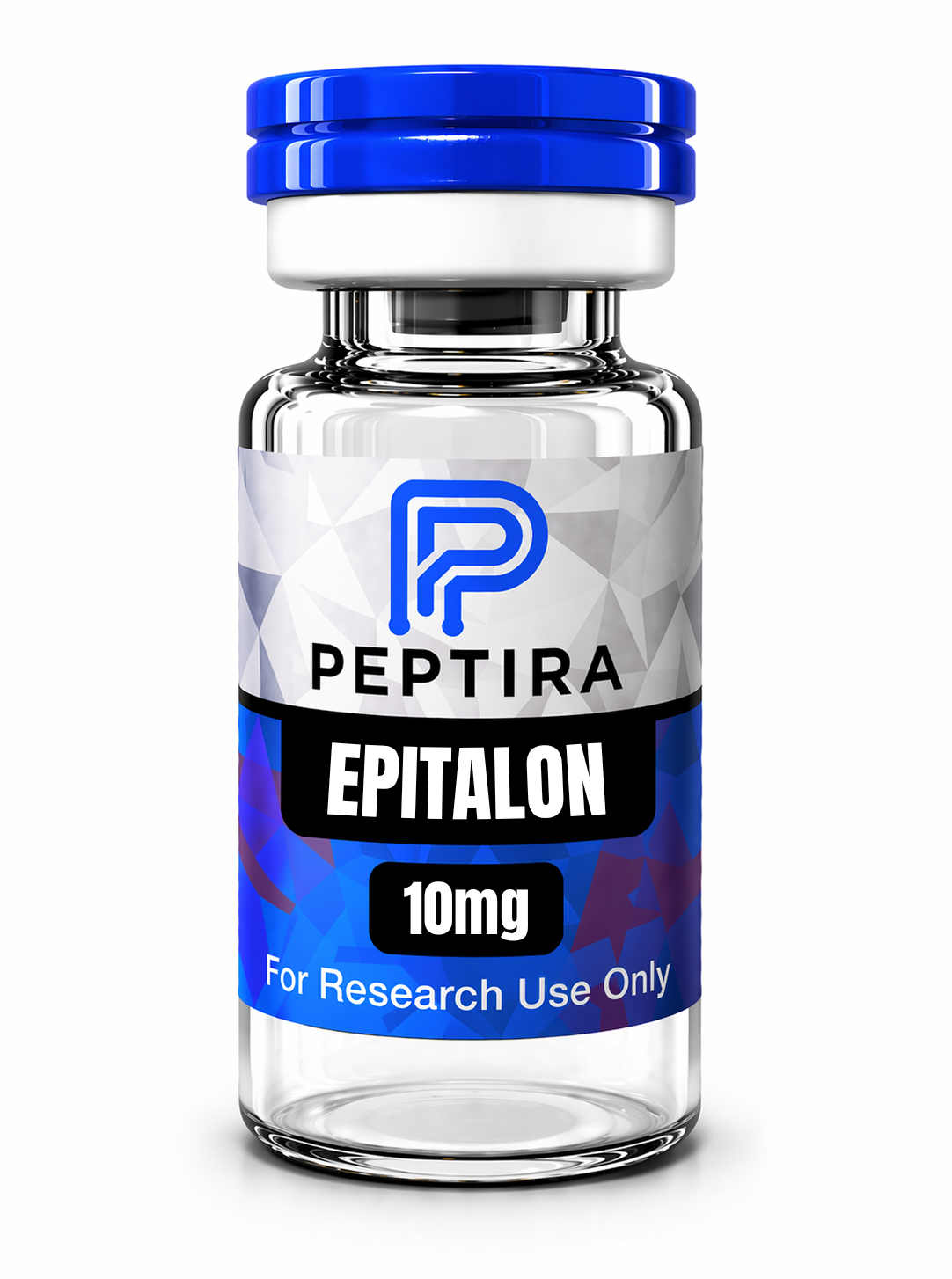
Buy Epitalon peptide online – at Peptira

$41.00
Epitalon Peptide is a synthetic tetrapeptide, also known as Epithalon or AEDG, studied as a peptide bioregulator in research involving pineal biology, cellular aging, telomerase activity, and neuroendocrine signaling. Laboratory and animal studies have investigated its effects on cellular and biological pathways associated with aging and circadian regulation. Epitalon is intended for qualified research use only and is not intended for human or veterinary use.
Epitalon Research
Epitalon peptide also known as Epithalon, Epithalone, or AEDG, is a synthetic tetrapeptide consisting of the amino-acid sequence Ala-Glu-Asp-Gly. It was developed from research involving epithalamin, a pineal-gland peptide preparation, and has subsequently been investigated as an individual peptide in cellular, animal, and biochemical research.
Epitalon is commonly categorized within research programs studying peptide bioregulators, particularly research involving pineal function, cellular aging, and neuroendocrine pathways.
Pineal Research
One important area of Epitalon research involves the pineal gland and its biological pathways. Experimental studies have investigated the relationship between Epitalon and melatonin synthesis, as well as changes in circadian-related endocrine signaling.
For example, an animal study published in Neuroendocrinology Letters examined Epitalon in senescent rhesus monkeys and reported changes in evening melatonin synthesis and cortisol circadian regulation. These findings are experimental animal data and should not be interpreted as evidence of an established effect in humans.
Telomerase and Telomere Research
Epitalon peptide has also attracted research interest because of its reported relationship with telomerase and telomere biology. Earlier research investigated telomerase-related activity, while a 2025 study examined Epitalon treatment in human cell lines and reported increased telomere length alongside changes in hTERT expression and telomerase-related activity.
These findings provide a basis for continued laboratory investigation into the relationship between short peptides, telomere biology, and cellular aging.
Cellular Aging Research
Epitalon has been studied in experimental models related to aging and cellular function. Published literature includes in-vitro, animal, and computational research examining antioxidant, neuroendocrine, cellular, and molecular pathways.
A 2025 scientific review summarized more than two decades of Epitalon research and highlighted several proposed biological mechanisms while also noting that important questions concerning its precise mechanism of action remain unresolved.
Bioregulator Research
Epitalon is frequently discussed within the broader field of peptide bioregulator research. In this context, researchers investigate short peptides and their potential relationships with tissue-specific biological processes, gene expression, cellular signaling, and physiological regulation.
The term “bioregulator” describes the research context in which Epitalon is studied; it should not be interpreted as evidence that the product is an approved therapeutic or that it produces a particular health outcome.
Molecular and Peptide Research
As a defined tetrapeptide,Epitalon peptide can also be studied from a peptide-chemistry perspective. Researchers may investigate:
- Peptide identity and sequence
- Molecular structure
- Purity and analytical characterization
- Stability
- Peptide-receptor interactions
- Cellular signaling
- Telomerase-related pathways
- Pineal and neuroendocrine biology
- Comparative peptide research
For reproducible laboratory work, researchers should verify the exact peptide sequence, purity, molecular specifications, lot information, and certificate of analysis associated with the material.
Current Research Evidence
The published literature on Epitalon peptide includes cellular and animal studies as well as a smaller human literature. A recent review concluded that Epitalon Peptide has been investigated extensively but that important aspects of its biological mechanisms and physicochemical characteristics remain incompletely understood.
This makes Epitalon an active subject for continued laboratory research rather than a compound for which broad clinical conclusions can be drawn from preclinical findings alone.
Laboratory Research Applications
Epitalon may be relevant to qualified research involving:
- Peptide bioregulators
- Cellular aging
- Telomere biology
- Telomerase research
- Pineal biology
- Melatonin-related pathways
- Neuroendocrine signaling
- Molecular biology
- Peptide chemistry
- Cellular signaling
- Experimental aging models
Research outcomes can vary depending on the experimental model, peptide purity, concentration, assay conditions, and study methodology.
Product Identification and Documentation
For accurate scientific characterization, researchers should verify the product’s exact sequence, purity specification, molecular weight, lot number, storage requirements, and available analytical documentation.
Because Epitalon is also marketed under names such as Epithalon and AEDG, using standardized nomenclature and batch-specific documentation is useful when comparing research materials.
Research Use Only
Epitalon peptide is supplied as experimental research material for qualified scientific and laboratory applications. It is not intended for human consumption, self-administration, diagnosis, treatment, or prevention of disease.
Important Research Notice
For Research Use Only. Epitalon Peptide research includes substantial preclinical work, but laboratory and animal findings should not be presented as established human therapeutic outcomes. Researchers should follow appropriate institutional laboratory procedures, safety requirements, and applicable regulations when handling experimental peptide materials.


Reviews
There are no reviews yet.