
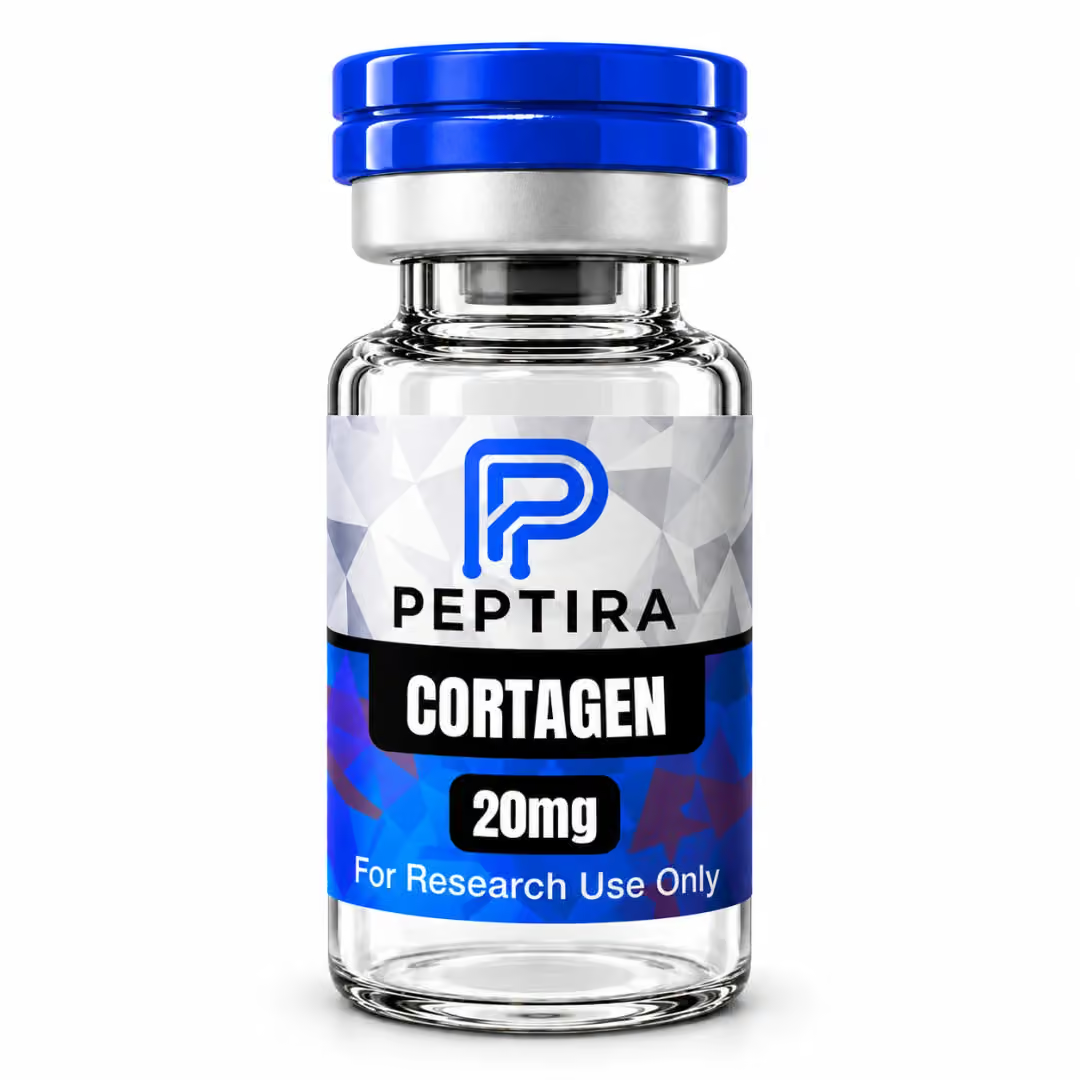
Cortagen
$62.00
Cortagen is a synthetic tetrapeptide bioregulator with the sequence Ala-Glu-Asp-Pro (AEDP). It is studied in laboratory research involving brain-cortex biology, cellular signaling, gene expression, and experimental tissue research. Published studies include animal and cellular models, making Cortagen a research material for investigating peptide bioregulation and related biological pathways. Cortagen is intended for qualified research use only and is not intended for human or veterinary use.
Cortagen – Bioregulator Research Material
Cortagen Research
Cortagen is a synthetic tetrapeptide with the amino-acid sequence Ala-Glu-Asp-Pro (AEDP). It belongs to the group of short peptide bioregulators associated with the Khavinson research tradition and was developed through directed synthesis based on amino-acid analysis of the natural brain-cortex peptide preparation Cortexin. Cortagen and Cortexin are different research materials: Cortexin is a complex peptide preparation, while Cortagen is a defined four-amino-acid sequence.
Bioregulator Research
Cortagen is studied within the broader field of peptide bioregulation, where researchers investigate short peptides in relation to cellular processes, gene expression, tissue-specific biology, and molecular signaling.
The bioregulator classification describes the scientific research context surrounding Cortagen and should not be interpreted as evidence of an established therapeutic effect.
Brain and Cortex Research
Cortagen has been investigated in experimental models involving cerebral cortex and nervous-system biology. Early research into tissue-specific effects reported activity in rat brain-cortex explant models, providing a basis for further investigation into short peptide interactions with tissue-specific biological systems.
These experimental observations are useful for laboratory research but should not be extrapolated directly to human outcomes.
Gene Expression Research
One published study investigated the effects of Cortagen on gene expression in mouse heart tissue using a large-scale microarray approach. Researchers analyzed more than 15,000 transcripts and reported significant changes in expression among a subset of genes following experimental exposure to Cortagen.
This type of research provides a model for investigating how short peptide bioregulators may interact with cellular gene-expression pathways.
Experimental Nerve Biology
Cortagen has also been investigated in animal models of nerve injury. A 2000 study examined sciatic-nerve regeneration in rats and reported changes in the growth rate and conduction velocity of regenerating nerve fibers following experimental Cortagen administration.
Because this was an animal study, these findings should be treated as preclinical research rather than evidence of an established human application.
Cellular and Molecular Research
The short sequence of Cortagen makes it suitable for research involving peptide chemistry and molecular characterization. Researchers may investigate its identity, sequence, molecular characteristics, stability, purity, and interactions within experimental cellular systems.
Cortagen can also be studied alongside related short bioregulator peptides to examine how small sequence differences may influence experimental biological responses.
Peptide Chemistry
Cortagen is a defined four-residue peptide, making accurate analytical characterization particularly important. Laboratory researchers may evaluate:
- Peptide sequence
- Molecular identity
- Purity
- Stability
- Molecular weight
- Cellular signaling
- Gene-expression pathways
- Tissue-specific research models
- Peptide interactions
For reproducible research, the exact sequence and lot-specific specifications should be confirmed using the applicable product documentation and certificate of analysis.
Laboratory Research Applications
Cortagen may be relevant to qualified research involving:
- Peptide bioregulators
- Brain-cortex biology
- Neurobiology
- Cellular signaling
- Gene-expressi
Be the first to review “Cortagen”
Related products
Bioregulators
Bioregulators
Bioregulators
Bioregulators
Bioregulators
Reviews
There are no reviews yet.