
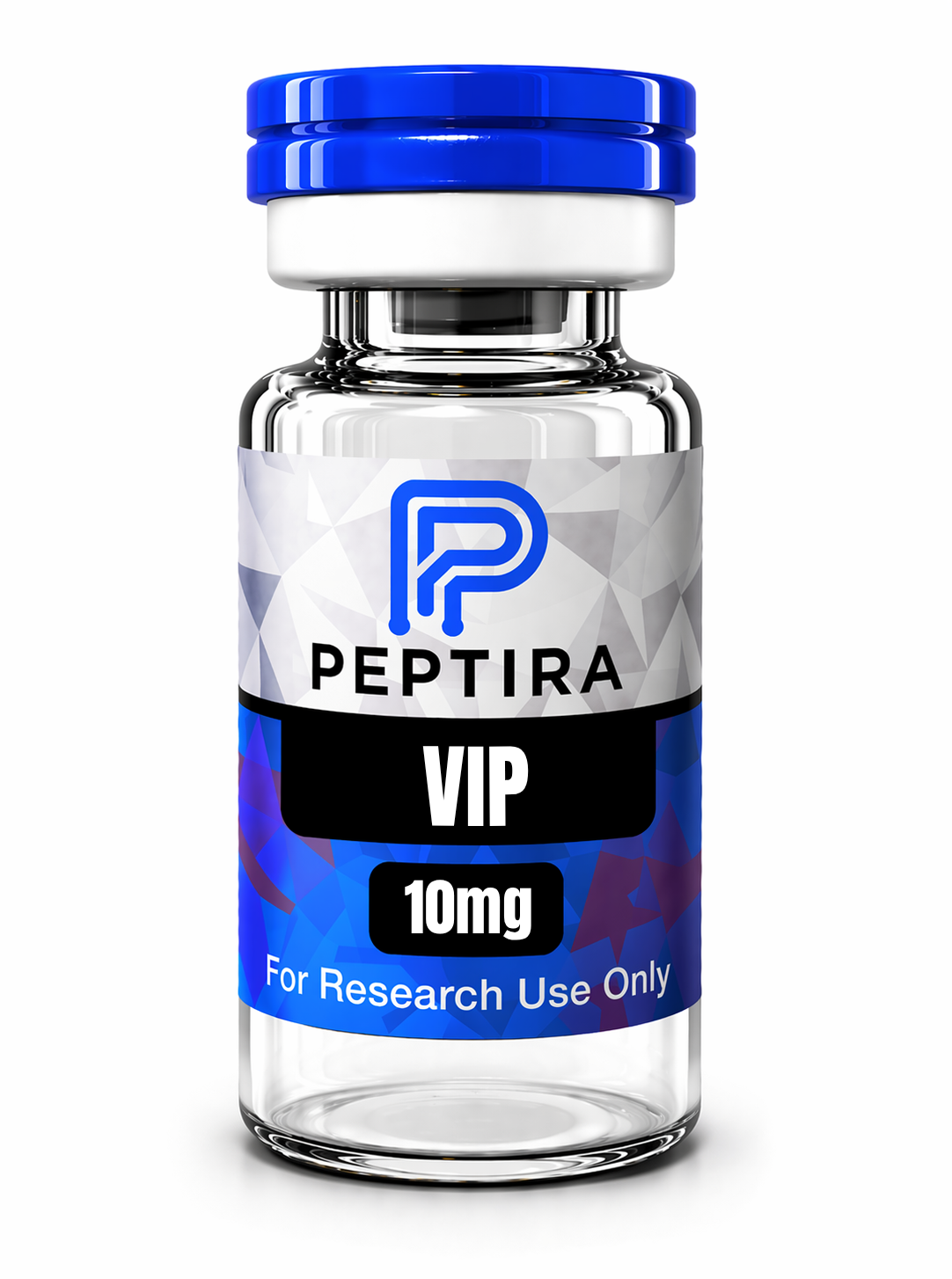
Buy VIP Peptide online – at Peptira
$70.00
VIP Peptide (Vasoactive Intestinal Peptide) is a naturally occurring 28-amino-acid neuropeptide studied in research involving neuroendocrine signaling, smooth-muscle physiology, vascular biology, immune signaling, and peptide-receptor interactions. VIP primarily acts through VPAC1 and VPAC2 receptors, making it an important research tool for studying peptide-mediated cellular signaling. It is intended for qualified scientific and analytical research and is not intended for human or veterinary use.
VIP – Vasoactive Intestinal Peptide Research Material
VIP Peptide Research
VIP Peptide is produced in several tissues and is involved in communication between the nervous system and peripheral organs. Its broad biological activity makes it an important research compound for investigating neuropeptide signaling and cellular responses.
Research Material for Laboratory Applications
VIP Peptide is intended for qualified laboratory and analytical research involving peptide chemistry, receptor pharmacology, neurobiology, vascular biology, and cellular signaling.
Researchers can investigate VIP under controlled experimental conditions to examine peptide structure, receptor interactions, intracellular signaling, and tissue-specific responses.
The quantity listed on a research product represents the amount of research material supplied and should not be interpreted as a human dosage or administration recommendation.
VIP Receptor Research
VIP Peptide primarily interacts with two G-protein-coupled receptors known as VPAC1 and VPAC2. These receptors are widely studied because of their involvement in intracellular signaling pathways triggered by peptide hormones and neuropeptides.
Research involving VIP and its receptors can help investigators examine receptor activation, cyclic AMP signaling, cellular communication, and differences in receptor expression across tissues.
Neurobiology Research
VIP Peptide is an important subject in neuropeptide and neuroscience research. Studies have investigated its role in neuronal communication and its presence in different regions of the central and peripheral nervous systems.
Researchers also study VIP in relation to biological processes involving neurotransmission, circadian signaling, and neuroendocrine communication.
Gastrointestinal and Vascular Research
VIP has been studied extensively in gastrointestinal biology and vascular physiology. Experimental research has investigated its relationship with intestinal smooth-muscle activity, secretion, and vascular signaling.
These properties make VIP a useful research model for studying how neuropeptides influence communication between nerves, smooth muscle, blood vessels, and other tissues.
Immune and Cellular Signaling Research
Research has also examined interactions between VIP and immune cells. Experimental studies have investigated VIP-associated signaling pathways and their relationship to inflammatory and immune responses.
Results can vary according to the experimental system, cell type, peptide concentration, receptor expression, and study conditions. Findings from individual models should therefore be interpreted within their specific research context.
Laboratory Research Applications
VIP may be relevant to qualified laboratory investigations involving:
- Vasoactive intestinal peptide research
- VPAC1 receptor research
- VPAC2 receptor research
- Neuropeptide signaling
- Neuroendocrine biology
- Gastrointestinal research
- Vascular signaling
- Smooth-muscle research
- Cellular signaling
- Peptide-receptor interactions
- Molecular pharmacology
- Analytical peptide characterization
Research outcomes can vary according to peptide purity, formulation, concentration, experimental model, assay conditions, and analytical methodology.
VIP Peptide Structure
VIP is a 28-amino-acid peptide belonging to the glucagon/secretin family of peptide hormones. Its structure and receptor interactions have been studied extensively in biochemical and pharmacological research.
For laboratory applications, researchers should verify the exact peptide sequence, molecular identity, purity, formulation, and other specifications through appropriate analytical documentation.
Laboratory Research Use Only
VIP is offered strictly as research material for qualified scientific and analytical applications. It is not marketed as a medication, dietary supplement, or treatment and is not intended for human or veterinary administration.
Researchers should handle, store, characterize, and analyze VIP according to appropriate institutional laboratory procedures, applicable safety requirements, and validated analytical protocols.
Important Research Notice
VIP is intended exclusively for scientific research and analytical purposes. Published research findings should not be interpreted as a claim that a particular research-grade VIP product diagnoses, treats, prevents, or cures any disease or medical condition.
Be the first to review “Buy VIP Peptide online – at Peptira”
Related products
Peptides
Peptides
Peptides
Peptides
Peptides
Peptides
Peptides
4 reviews for Buy VIP Peptide online – at Peptira
There are no reviews yet.