
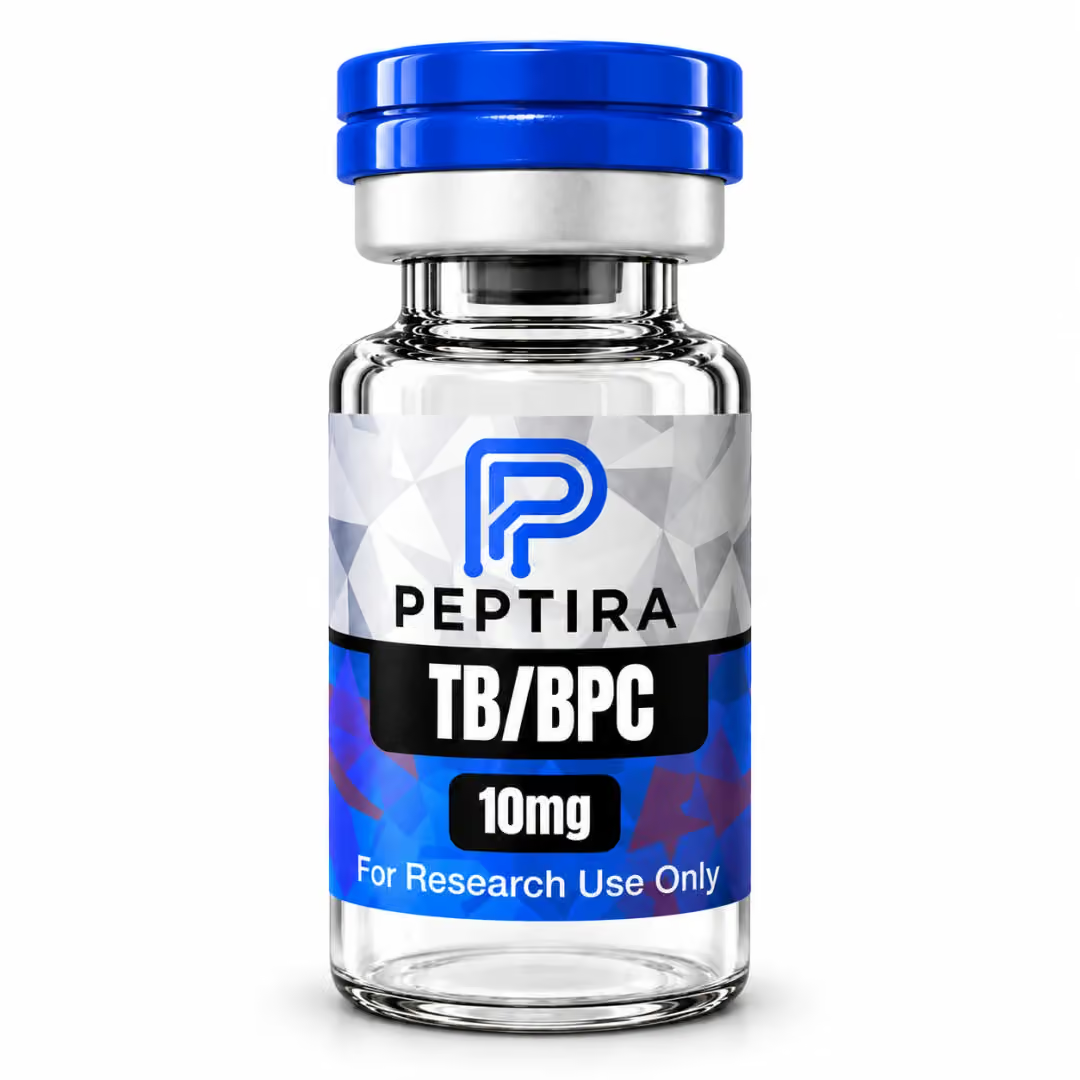
TB/BP Blend (Wolverine)
$64.00
TB/BP Blend (Wolverine) is a research peptide blend containing BPC-157 and TB-500, two distinct experimental peptides commonly studied separately in preclinical research involving cellular signaling, tissue biology, angiogenesis, and repair-related pathways. The “Wolverine” name refers to the combination rather than a single peptide. Importantly, there is currently no controlled peer-reviewed study establishing the effects or synergy of the two peptides when used together.
TB/BP Blend (Wolverine) – Research Peptide Material
TB/BP Blend Research
TB/BP Blend, commonly referred to as the Wolverine Blend, is a research combination of two distinct experimental peptides: BPC-157 and TB-500. The blend is not a single chemical entity; each component has its own molecular structure and research literature.
BPC-157 is a synthetic pentadecapeptide, while TB-500 is commonly described as a synthetic peptide based on the actin-binding region of thymosin beta-4. The two compounds are often discussed together because their proposed biological pathways differ.
BPC-157 Research
BPC-157 has been investigated primarily in preclinical research involving cellular signaling, vascular responses, connective-tissue models, and gastrointestinal biology. Much of the published evidence comes from laboratory and animal studies.
These studies provide a basis for investigating the molecular activity of BPC-157 but should not be interpreted as evidence of established human therapeutic effects.
TB-500 Research
TB-500 is generally described as a synthetic peptide corresponding to the actin-binding region of thymosin beta-4. Research involving thymosin beta-4 and related peptide fragments has examined actin regulation, cell migration, angiogenesis, and cellular repair mechanisms.
An important research distinction is that much of the published literature concerning thymosin beta-4 involves the full-length 43-amino-acid protein, rather than the shorter compound marketed as TB-500. Researchers should therefore distinguish between evidence for TB-500 itself and evidence involving full-length thymosin beta-4.
Wolverine Blend Research
The term “Wolverine Blend” is a research-community and commercial name for the BPC-157 and TB-500 combination. It does not represent a standardized single molecule, and formulations can vary between suppliers.
For scientific accuracy, researchers should verify the exact BPC-157 and TB-500 quantities, peptide sequences, purity, formulation, and lot-specific documentation for the product being studied.
Combination Research
The proposed rationale for combining BPC-157 and TB-500 is based on their separately studied biological pathways. However, this rationale should not be confused with demonstrated combination efficacy.
Available research has not established a validated synergy ratio, standardized combination protocol, or controlled clinical outcome for BPC-157 and TB-500 administered together. Published findings concerning the individual compounds should therefore be kept separate from claims about the combined formulation.
Laboratory Research Applications
TB/BP Blend may be relevant to qualified laboratory research involving:
- Peptide chemistry
- Cellular signaling
- Tissue biology
- Angiogenesis research
- Cell migration research
- Protein and peptide interactions
- Experimental wound-healing models
- Connective-tissue research
- Molecular biology
- Analytical peptide characterization
Research results can vary depending on the experimental model, peptide purity, concentration, formulation, assay conditions, and study methodology.
Product Characterization
Because “Wolverine Blend” is not a standardized chemical identity, researchers should verify the exact formulation before beginning an experiment.
Important product information may include the individual BPC-157 and TB-500 quantities, peptide sequences, molecular weights, purity specifications, lot number, storage conditions, and certificate of analysis.
This information is particularly important when comparing Wolverine products from different suppliers because products using the same commercial name may not have identical formulations.
Research Use Only
TB/BP Blend (Wolverine) is supplied as experimental research material for qualified scientific and laboratory applications. It is not intended for human consumption, self-administration, diagnosis, treatment, or prevention of disease.
Important Research Notice
For Research Use Only. The Wolverine name describes a research combination of BPC-157 and TB-500 and does not indicate an established medical treatment. Research involving the individual peptides should not be interpreted as evidence that the combined formulation produces the same effects or provides demonstrated synergy. Researchers should follow appropriate institutional laboratory procedures, safety requirements, and applicable regulations.
Be the first to review “TB/BP Blend (Wolverine)”
Related products
Peptide Blends
Peptide Blends
Peptide Blends
Peptide Blends
2 reviews for TB/BP Blend (Wolverine)
There are no reviews yet.