
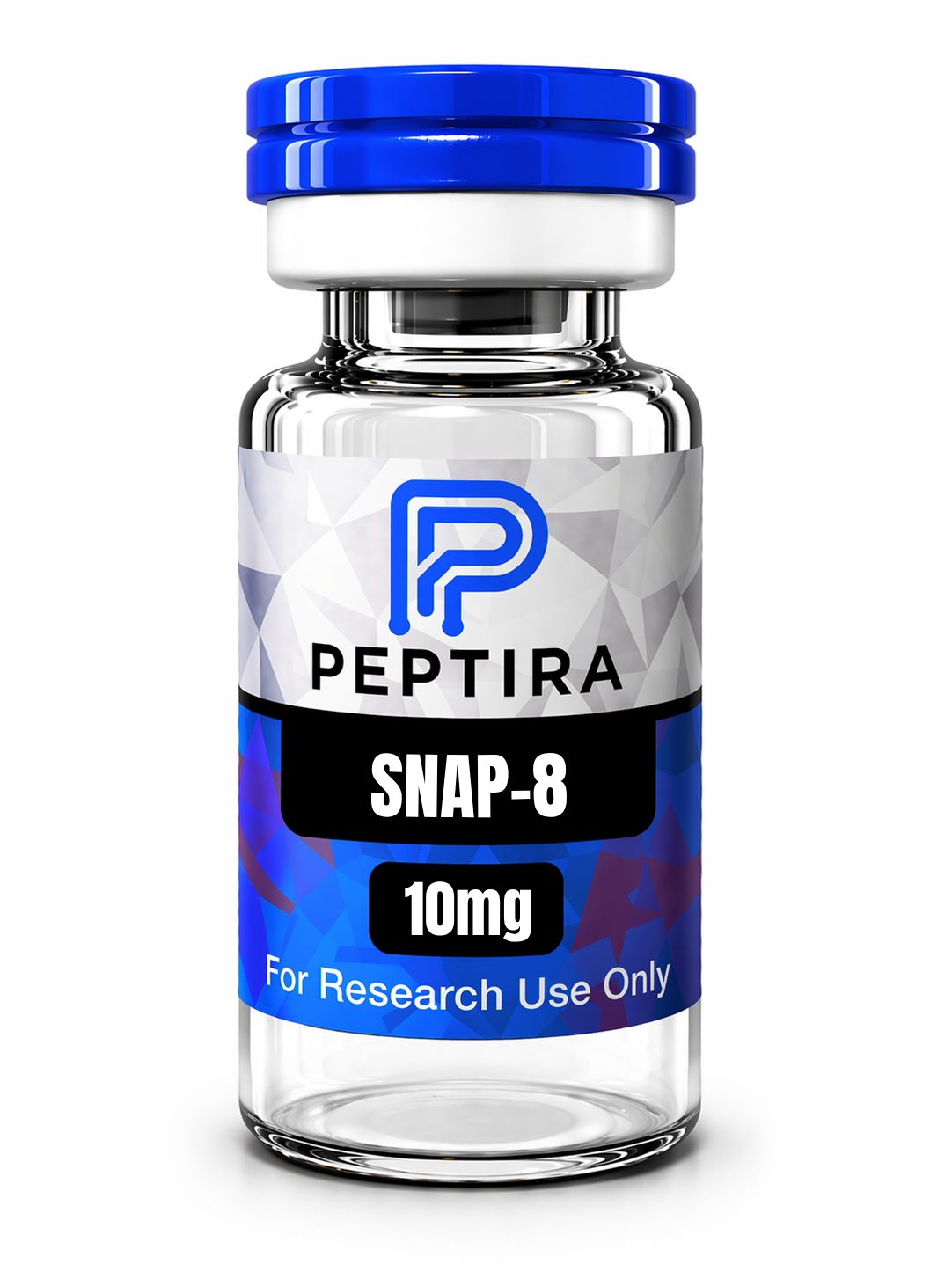
Buy SNAP-8 online – at Peptira
$44.00
SNAP-8 is a synthetic octapeptide studied in cosmetic formulation research and peptide chemistry. Also known as acetyl octapeptide-3, it is associated with investigations into SNAP-25-related molecular interactions and peptide-based cosmetic ingredients. This product is intended for laboratory research purposes only and is not intended for human or veterinary use
SNAP-8 – Cosmetic Research Peptide
Overview of SNAP-8
SNAP-8, also known as acetyl octapeptide-3, is a synthetic peptide consisting of eight amino acid residues. It is known in cosmetic ingredient research and is studied in relation to peptide chemistry, molecular interactions, and the development of cosmetic formulations. Its defined structure makes it a material of interest for researchers investigating the properties of short synthetic peptides.
Peptide Structure and Chemistry
SNAP-8 is an acetylated synthetic octapeptide commonly identified by the sequence Ac-Glu-Glu-Met-Gln-Arg-Arg-Ala-Asp-NH₂. Its structure includes eight amino acid residues, with modifications at the terminal ends. Researchers can investigate its identity, molecular characteristics, and behavior under controlled laboratory conditions. Exact identity and specifications should always be confirmed against the supplier’s documentation.
SNAP-25-Related Research
SNAP-8 is discussed in cosmetic science because its design is related to a region of SNAP-25, a protein involved in the cellular machinery responsible for vesicle fusion. This connection has informed proposed research into interactions with the SNARE protein complex. However, the proposed mechanism should not be treated as definitive proof that SNAP-8 produces a particular biological or cosmetic effect. Independent research specifically examining the peptide itself remains limited.
Cosmetic Formulation Research
Synthetic peptides are investigated as ingredients in different cosmetic formulation systems. Research may examine ingredient compatibility, stability, formulation characteristics, and how peptides behave when incorporated into complex products. SNAP-8 is associated with this area of cosmetic ingredient research, although findings from multi-ingredient formulations cannot establish the independent effect of SNAP-8.
Molecular and Laboratory Studies
SNAP-8 may be of interest to researchers studying synthetic peptide chemistry, molecular structure, peptide-protein interactions, and analytical identification. Appropriate laboratory investigations can help characterize a material and distinguish its properties from those of related peptides, including acetyl hexapeptide-8, commonly known as Argireline. Although the compounds are related, they are not identical and should not be treated as interchangeable.
Analytical Identification and Quality Documentation
Reliable product identification is important when working with synthetic research materials. Researchers should review available analytical documentation, batch information, and the stated chemical identity before incorporating a material into a study. Where available, appropriate analytical methods can help evaluate identity and composition. No specific purity level or testing certification should be assumed unless it is supported by documentation for the relevant batch.
Research Applications
SNAP-8 may be relevant to laboratory projects involving synthetic peptide characterization, cosmetic ingredient science, formulation research, and investigations of peptide-related molecular interactions. Research objectives, experimental methods, and interpretations should be based on established scientific protocols rather than commercial descriptions or unverified claims.
Understanding the Evidence
The scientific evidence specific to SNAP-8 is limited. Published studies that include the ingredient in multi-component cosmetic formulations cannot reliably isolate its individual contribution to an observed outcome. Further independent research would be needed to establish its properties, effectiveness, and safety in specific applications.
Research Use Only
SNAP-8 supplied by Peptira is presented as a research material, not as a medicine or a proven cosmetic treatment. It is intended for laboratory research purposes only and is not intended for human or veterinary use.
Important Research Notice
The information above is provided for scientific and educational context. Researchers should verify product identity and specifications using the relevant label and analytical documentation, follow institutional laboratory safety procedures, and comply with applicable regulations.
Be the first to review “Buy SNAP-8 online – at Peptira”
Related products
Peptides
Peptides
Peptides
Peptides
Peptides
Peptides
Reviews
There are no reviews yet.