
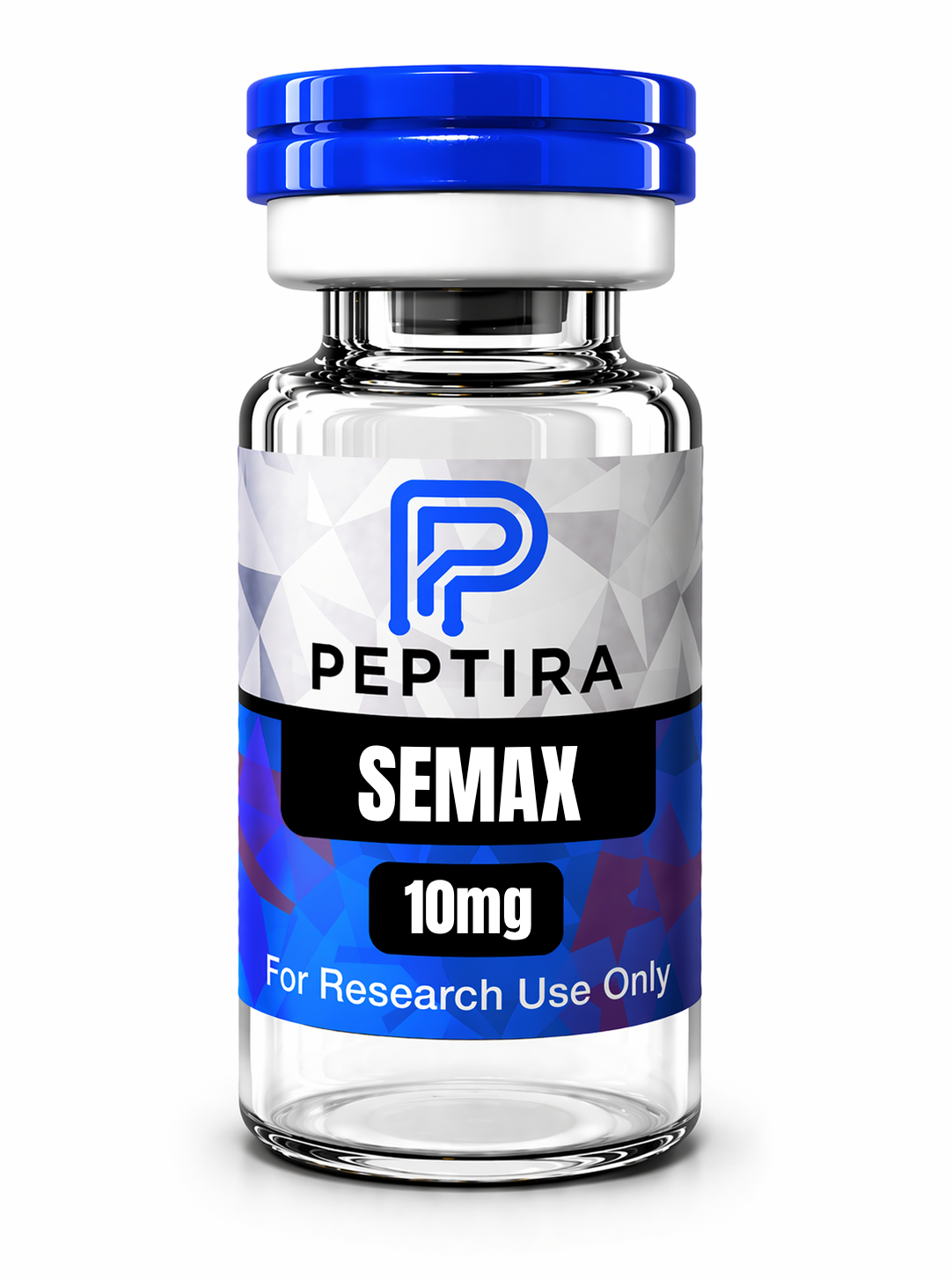
Buy Semax peptide online – at Peptira
$40.00
Semax peptide is a research-use-only synthetic heptapeptide derived from an ACTH-related sequence and studied in laboratory research involving neuronal signaling, gene expression, cellular responses, and neurobiology. This material is intended strictly for qualified laboratory and analytical research and is not intended for human or veterinary use.
Semax Peptide Research
Semax peptide is a synthetic heptapeptide commonly identified as ACTH(4–7)PGP, with the sequence Met-Glu-His-Phe-Pro-Gly-Pro. It is derived from an adrenocorticotropic hormone (ACTH)-related peptide sequence and has been investigated in experimental research involving neuronal activity, cellular signaling, gene expression, and neurobiology.
Semax has attracted scientific interest because researchers can use the peptide to investigate how short regulatory peptide sequences interact with biological systems. Studies have examined its effects in cellular, neuronal, and animal models under controlled experimental conditions.
Research Material for Laboratory Applications
This is intended for qualified laboratory and analytical research involving peptide biology, neuroscience, molecular signaling, and cellular responses. Researchers may investigate its molecular characteristics, interactions with biological systems, and effects on specific experimental pathways.
The research literature includes studies examining Semax in experimental models of cerebral ischemia, neuronal signaling, inflammatory gene expression, and brain-cell activity. These findings provide areas for scientific investigation but should not be interpreted as proof of therapeutic effectiveness in humans.
Neuronal and Molecular Research
One area of it research involves neuronal signaling and gene expression. Experimental studies have reported changes in gene and protein expression following exposure to Semax in animal models. Research has examined pathways associated with inflammatory responses, cellular signaling, and neuronal function.
More recent laboratory research has also investigated Semax in relation to intracellular calcium dynamics in neuronal preparations. Such experiments help researchers examine the early cellular responses that may occur when the peptide interacts with neuronal systems.
Semax and Experimental Neurobiology
This has been studied in experimental models related to brain injury and neuronal responses. Some research has investigated changes in inflammatory mediators and gene-expression patterns following experimental cerebral ischemia. These studies are useful for understanding potential molecular mechanisms, but results from animal or isolated-cell models cannot automatically be translated into human clinical outcomes.
Researchers may therefore use Semax as a model compound when studying peptide-mediated signaling, neurobiology, transcriptional responses, and cellular mechanisms.
Regulatory and Research Context
It is not an FDA-approved drug in the United States. FDA materials have identified limited safety information for proposed human-use routes and raised concerns regarding potential immunogenicity associated with peptide aggregation and impurities.
For this reason, Semax research material should be clearly distinguished from approved pharmaceutical products and should not be presented as an FDA-approved treatment or medication.
Be the first to review “Buy Semax peptide online – at Peptira”
Related products
Peptides
Peptides
Peptides
Peptides
Peptides
Reviews
There are no reviews yet.