
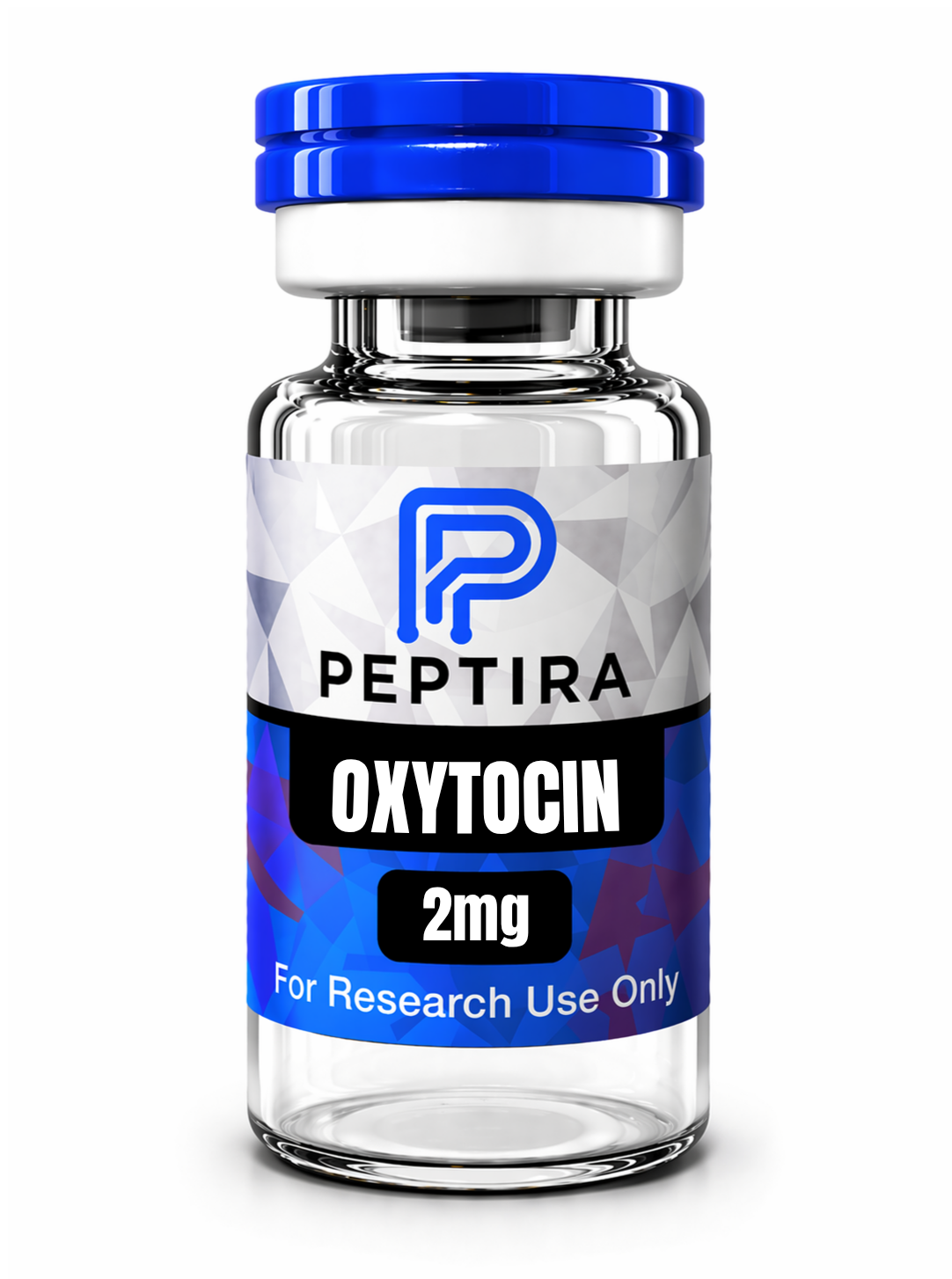
Oxytocin
$34.00
Oxytocin is a naturally occurring peptide hormone studied extensively in research involving neuroendocrine signaling, social behavior, reproductive biology, smooth-muscle activity, and hormone-receptor interactions. Oxytocin acts primarily through the oxytocin receptor, making it an important compound for laboratory research into peptide signaling and physiological pathways. It is intended for qualified scientific and analytical research and should not be confused with approved pharmaceutical oxytocin products.
Oxytocin – Research Peptide Material
Oxytocin Peptide Research
Oxytocin is a naturally occurring nonapeptide hormone produced primarily in the hypothalamus and released through the neurohypophysis. It has been extensively studied in endocrinology, neuroscience, reproductive biology, and peptide pharmacology.
Oxytocin is particularly relevant to research involving hormone signaling, receptor activation, social and behavioral biology, reproductive physiology, and smooth-muscle activity.
Research Material for Laboratory Applications
Oxytocin is intended for qualified laboratory and analytical research involving peptide chemistry, receptor pharmacology, neuroendocrine signaling, and physiological research.
Researchers can investigate oxytocin under controlled experimental conditions to examine peptide structure, receptor interactions, cellular signaling, and biological responses.
The product quantity listed on a research product represents the amount of research material supplied and should not be interpreted as a recommended human dosage.
Oxytocin Receptor Research
Oxytocin produces its biological effects primarily through the oxytocin receptor (OXTR), a G-protein-coupled receptor expressed in multiple tissues.
Research involving OXTR signaling can examine receptor activation, intracellular signaling pathways, ligand-receptor interactions, and tissue-specific responses. This makes oxytocin a widely used research compound for studying peptide hormone signaling.
Neuroendocrine Research
Oxytocin has an important role in neuroendocrine research. Studies have investigated oxytocin signaling in relation to hypothalamic function, neuronal communication, social behavior, stress-related pathways, and other aspects of neurobiology.
Research findings can vary depending on the species, experimental model, administration method, dose, and study conditions. Results from animal or laboratory studies should therefore not automatically be interpreted as evidence of equivalent effects in humans.
Reproductive Biology Research
Oxytocin is also extensively studied in reproductive biology. Research has examined its involvement in uterine contractility, lactation, reproductive hormone signaling, and related physiological processes.
Because oxytocin is an endogenous hormone, it provides an important model for understanding how peptide hormones regulate communication between the nervous, endocrine, and reproductive systems.
Molecular and Cellular Research
Laboratory research involving oxytocin may investigate:
- Oxytocin receptor signaling
- Peptide-receptor interactions
- Neuroendocrine pathways
- Reproductive biology
- Hormone signaling
- Cellular signaling
- Neurobiology
- Smooth-muscle research
- Peptide chemistry
- Molecular pharmacology
Experimental outcomes may vary according to the research model, peptide formulation, concentration, analytical method, and experimental conditions.
Oxytocin and Pharmaceutical Products
Oxytocin is also used as an active ingredient in approved pharmaceutical products for specific medical indications. Research-grade oxytocin should therefore be clearly distinguished from pharmaceutical formulations manufactured and regulated for clinical use.
The existence of approved oxytocin medicines does not mean that an individual research-grade product is equivalent to an approved pharmaceutical formulation.
Researchers should verify the identity, purity, formulation, and analytical specifications of the material through appropriate documentation.
Quality and Analytical Research
Accurate characterization is important when working with peptide hormones. Researchers may evaluate factors such as molecular identity, purity, concentration, stability, and other analytical characteristics.
Appropriate analytical documentation can help researchers confirm that the material meets the specifications required for their particular experimental protocol.
Laboratory Research Use Only
Oxytocin is offered as research material for qualified scientific and analytical applications. It is not marketed through this product description as a medication, dietary supplement, or treatment and should not be used for human or veterinary administration.
Researchers should handle, store, characterize, and analyze oxytocin according to appropriate institutional laboratory procedures, applicable safety requirements, and validated analytical protocols.
Important Research Notice
Oxytocin is intended for scientific research and analytical purposes. Information about the biological functions of naturally occurring oxytocin or approved pharmaceutical products should not be interpreted as a claim that a particular research-grade product diagnoses, treats, prevents, or cures any disease or medical condition.
Be the first to review “Oxytocin”
Related products
Peptides
Peptides
Peptides
Peptides
Peptides
Peptides
Peptides
Reviews
There are no reviews yet.