
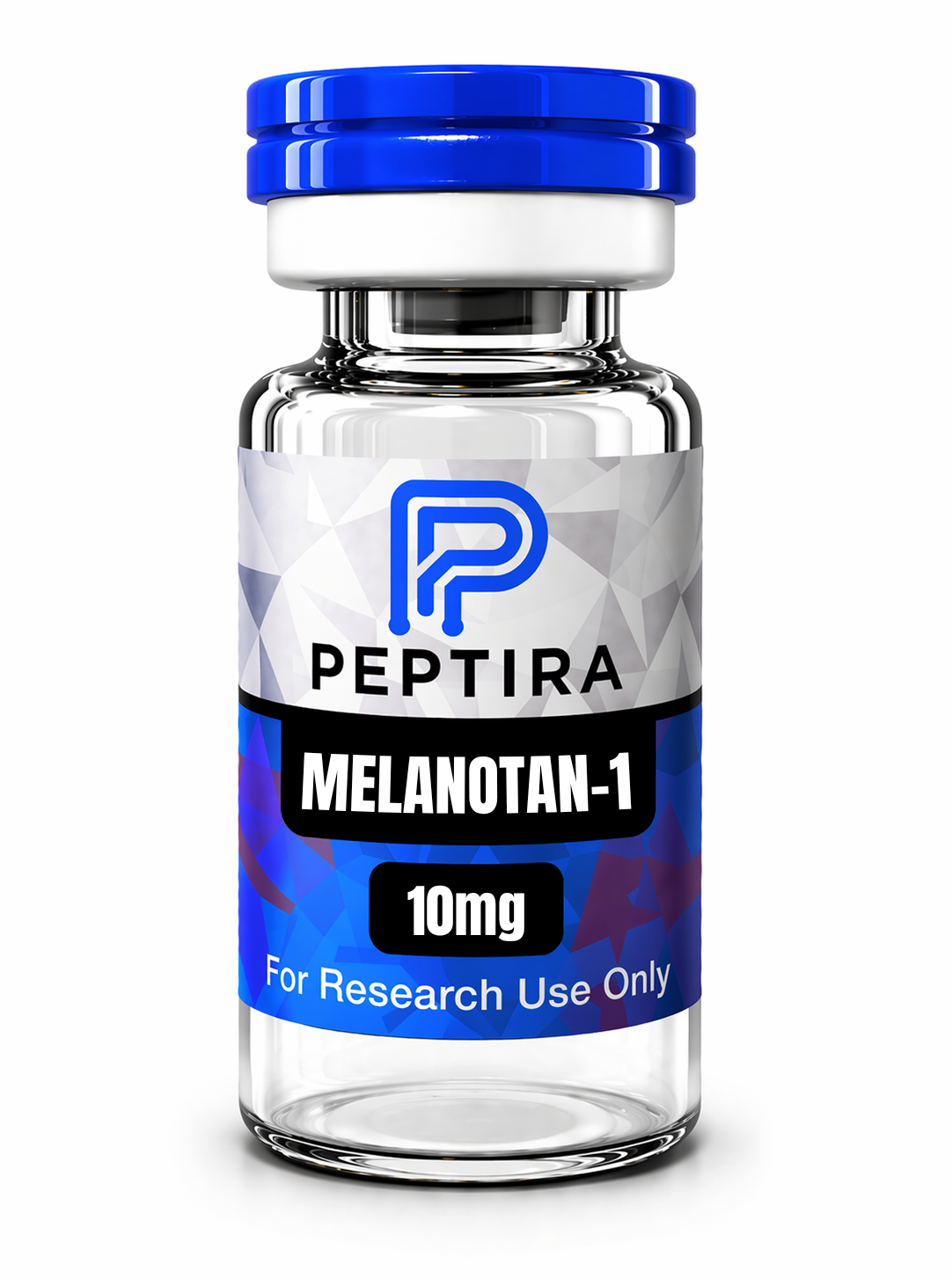
Melanotan-1
$39.00
Melanotan-1, also known as afamelanotide, is a synthetic analogue of alpha-melanocyte-stimulating hormone (α-MSH) studied in melanocortin receptor signaling, melanin production, pigmentation biology, and peptide pharmacology. Research has examined its interaction with melanocortin receptors, particularly MC1R, and its effects on melanogenesis. It is intended for qualified research and analytical applications and is not intended for human or veterinary use.
Melanotan-1 – Research Peptide Material
Melanotan-1 Peptide Research
Melanotan-1, also known as MT-1 or afamelanotide, is a synthetic analogue of alpha-melanocyte-stimulating hormone (α-MSH). It has been studied extensively in laboratory and clinical research involving melanocortin receptor signaling, pigmentation biology, peptide pharmacology, and melanin production. FDA documentation identifies afamelanotide as a structural analogue of α-MSH and a melanocortin receptor agonist.
Melanocortin Receptor Research
Melanotan-1 is particularly relevant to research involving the melanocortin receptor system. Studies have examined its interaction with melanocortin receptors, including MC1R, a receptor involved in signaling pathways associated with melanogenesis. Activation of MC1R can influence the production of melanin within melanocytes, making Melanotan-1 useful for investigating pigmentation-related cellular pathways.
Melanin and Pigmentation Research
Melanin is a naturally occurring pigment involved in skin coloration and biological responses to ultraviolet radiation. Research involving Melanotan-1 has examined changes in pigmentation and melanin production following activation of melanocortin pathways. Earlier human research investigated the pharmacokinetics and pigmentation effects of Melanotan-I, providing information about its interaction with pigmentation biology.
For laboratory researchers, these characteristics make Melanotan-1 relevant to studies examining melanocyte signaling, peptide-receptor interactions, pigment biology, and the molecular mechanisms regulating melanin synthesis.
Peptide Structure and Research Applications
Melanotan-1 is a modified melanocortin peptide derived from the α-MSH framework. Its structure incorporates modifications that distinguish it from naturally occurring α-MSH. FDA records identify afamelanotide under several scientific names, including Melanotan I, MT-1, and NDP-α-MSH.
Research applications may include peptide characterization, receptor-binding studies, melanocortin pathway research, pigmentation biology, and analytical investigations of synthetic peptide materials. Experimental results should always be interpreted according to the specific research model and analytical methods used.
Regulatory and Scientific Context
Afamelanotide is also the active substance in SCENESSE®, an FDA-approved implant for a specific medical indication involving adults with erythropoietic protoporphyria (EPP). The approved pharmaceutical formulation is a controlled-release implant administered by healthcare professionals. A research-material product should not be represented as equivalent to that approved pharmaceutical product.
This distinction is important when describing Melanotan-1 online. The product offered for laboratory research should be presented according to its intended research purpose rather than as a treatment, cosmetic tanning product, or substitute for an approved medicine.
Laboratory Research Use Only
Melanotan-1 is intended solely for qualified laboratory, analytical, educational, and scientific research. It is not intended for human consumption, self-administration, diagnosis, treatment, disease prevention, cosmetic tanning, or veterinary use.
Researchers should follow appropriate institutional procedures for handling, storage, characterization, and disposal of synthetic peptide research materials.
Important Research Notice
Melanotan-1 is a scientifically characterized melanocortin peptide associated with research into MC1R signaling, melanogenesis, pigmentation biology, and peptide pharmacology. The information on this page is provided for scientific and educational purposes and should not be interpreted as medical advice or a recommendation for human use.
Be the first to review “Melanotan-1”
Related products
Peptides
Peptides
Peptides
Peptides
Peptides
Peptides
4 reviews for Melanotan-1
There are no reviews yet.