
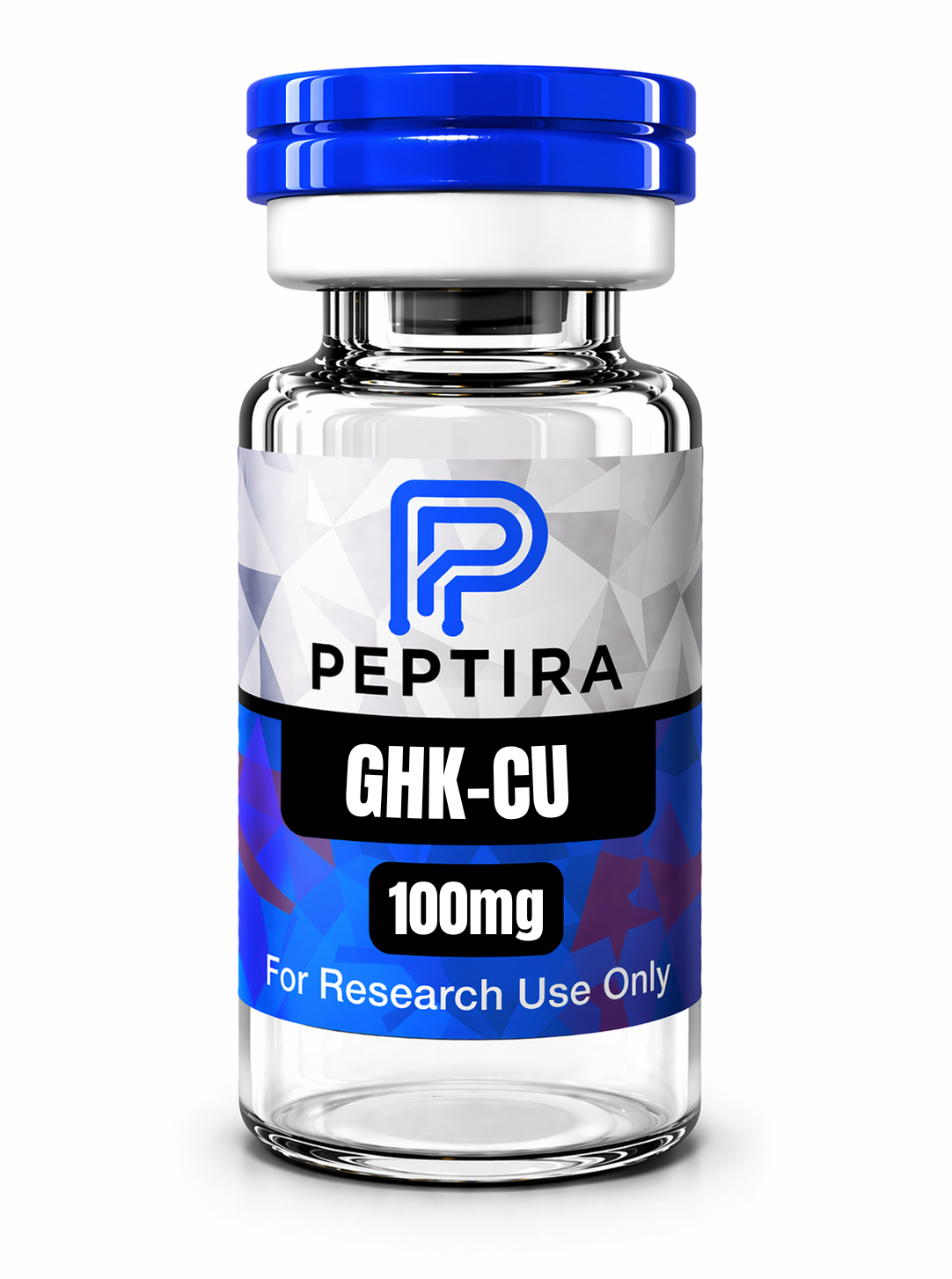
Ghk-cu Peptide
$40.00
Ghk-cu Peptide is a research-use-only material containing (glycyl-L-histidyl-L-lysine copper), a copper-binding tripeptide studied in laboratory research involving extracellular-matrix remodeling, collagen synthesis, antioxidant activity, and tissue biology. Research findings include in-vitro and animal studies, while human evidence remains limited.
GHK-CU 100MG – Copper Peptide Research Material
Ghk-cu Peptide is a research-use-only material containing GHK-Cu, also known as copper tripeptide or glycyl-L-histidyl-L-lysine copper. GHK is a naturally occurring three-amino-acid peptide composed of glycine, histidine, and lysine. When it binds with copper(II), it forms the GHK-Cu complex that has been investigated extensively in biochemical and biological research.
Research
GHK-Cu Peptide has been studied for several decades, with research focusing on extracellular-matrix biology, cellular signaling, copper transport, tissue remodeling, and related biological processes. Laboratory studies have investigated how it interacts with fibroblasts and other biological systems.
Early research reported that it could stimulate collagen synthesis in cultured fibroblasts. Other laboratory research investigated its effects on glycosaminoglycan synthesis, providing a foundation for continued investigation into the biological activity of this copper peptide.
Research-Grade Copper Peptide Material
Ghk-cu Peptide is presented as a research material for qualified laboratory and analytical applications. Researchers can use appropriately characterized GHK-Cu materials when investigating peptide chemistry, copper-peptide interactions, cellular biology, and related research questions.
Research materials should be handled by appropriately trained personnel using suitable laboratory procedures. Researchers should establish their own analytical methods, storage conditions, handling procedures, and experimental protocols according to institutional requirements and applicable regulations.
Extracellular-Matrix Research
One area of interest surrounding GHK-Cu is extracellular-matrix research. Studies using cultured fibroblasts have reported effects on collagen synthesis, while animal wound models have examined changes in extracellular-matrix accumulation and related biological markers.
These findings provide a scientific basis for further laboratory investigation, but results from cell and animal models should not automatically be interpreted as evidence of human therapeutic effectiveness.
Copper Peptide Research
The copper-binding properties of GHK are an important part of its research profile. GHK has a high affinity for copper and forms the GHK-Cu complex through interaction with copper(II). Researchers continue to investigate the chemistry, biological activity, stability, and potential applications of this copper-peptide system.
This 100MG provides a clearly identified research material for laboratories studying copper-peptide chemistry and associated biological pathways.
Current Research Evidence
The published literature surrounding GHK-Cu includes extensive in-vitro and animal research, with substantially less human clinical evidence. A 2026 systematic review identified 20 studies specifically evaluating GHK-Cu in aesthetic medicine, including 18 preclinical studies and 2 randomized controlled trials. The authors noted the limited clinical evidence and lack of standardized clinical guidelines.
This distinction is important when describing for research purposes. Laboratory findings can help researchers understand biological mechanisms, but they do not by themselves establish that a research material produces a particular outcome in humans.
Laboratory Research Use Only
is intended strictly for research and analytical purposes. It is not intended for human or veterinary use, self-administration, diagnosis, treatment, cure, or prevention of disease.
The product should not be marketed with unsupported claims regarding anti-aging, wound healing, hair growth, skin rejuvenation, or other therapeutic outcomes. Such claims would require appropriate evidence for the specific formulation, route of administration, dose, and population being discussed.
Why Researchers Study
It remains an interesting subject for peptide and copper biology research because it combines a naturally occurring tripeptide with copper-binding properties. Research has explored its relationship with collagen production, glycosaminoglycan synthesis, extracellular-matrix remodeling, inflammation, and oxidative processes.
this is therefore positioned as a research material for qualified laboratories conducting controlled investigations involving copper peptides, peptide chemistry, cellular biology, and related scientific applications.
Important Research Notice
GHK-CU 100MG is supplied for research purposes only. It is not intended for human or veterinary use and should not be represented as an approved pharmaceutical or therapeutic product.
Researchers should follow appropriate laboratory safety practices, institutional requirements, and applicable regulations when handling this material.
Be the first to review “Ghk-cu Peptide”
Related products
Peptides
Peptides
Peptides
Peptides
2 reviews for Ghk-cu Peptide
There are no reviews yet.