
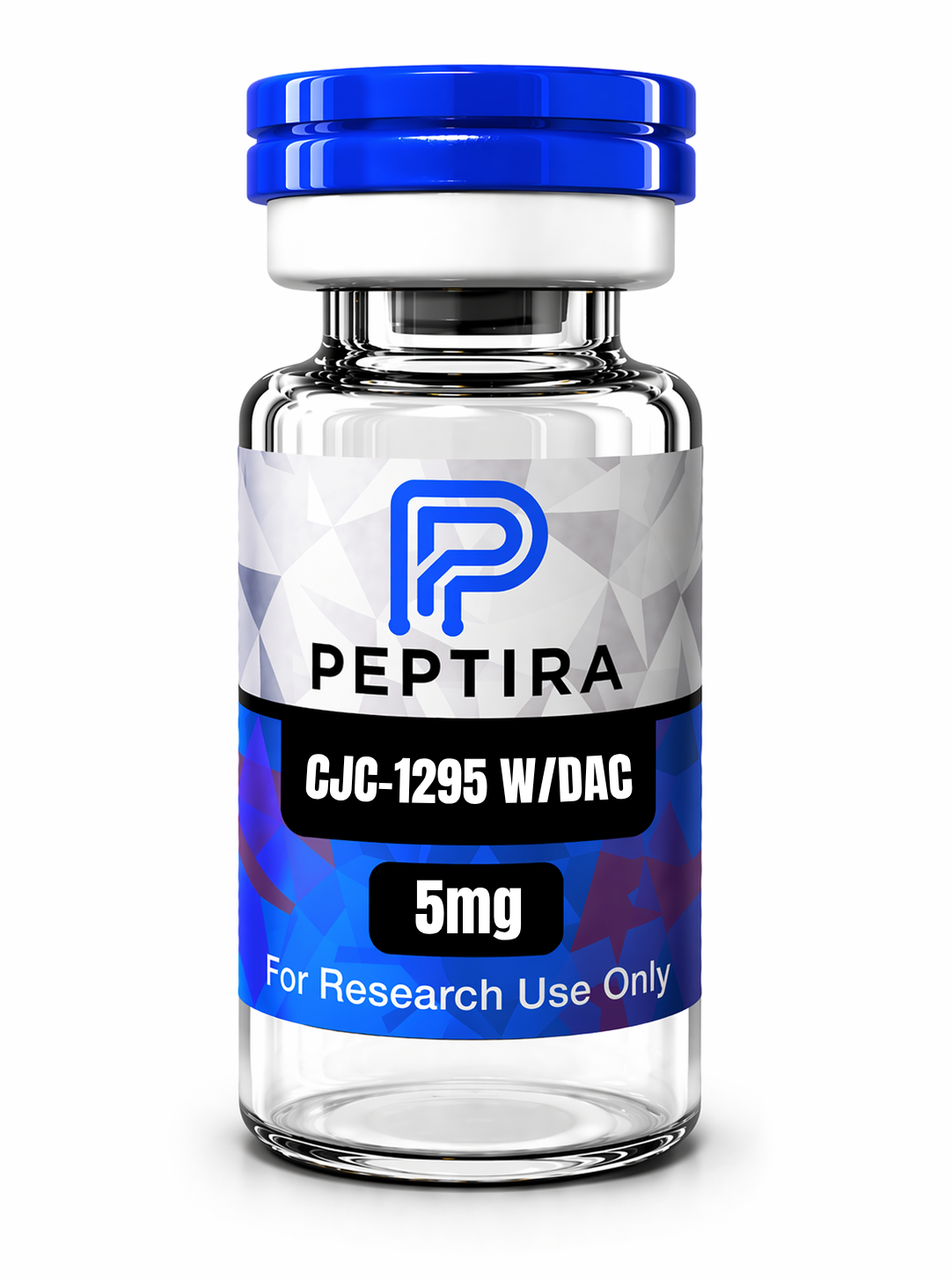
CJC-1295 DAC
$39.00
CJC-1295 DAC is a long-acting synthetic analogue of growth hormone-releasing hormone (GHRH) studied in research involving GH and IGF-1 signaling, peptide pharmacology, and endocrine biology. The DAC modification enables prolonged interaction with endogenous albumin, extending the compound’s circulating half-life compared with shorter-acting GHRH analogues. It is intended for qualified laboratory and analytical research and is not intended for human or veterinary use.
CJC-1295 DAC – Long-Acting GHRH Research Peptide
CJC-1295 DAC Peptide Research
CJC-1295 DAC is a synthetic, long-acting analogue of growth hormone-releasing hormone (GHRH) investigated in laboratory, preclinical, and clinical research involving growth hormone signaling, IGF-1 pathways, peptide pharmacology, and endocrine biology.
The DAC component refers to a drug-affinity complex designed to promote binding with endogenous albumin after administration. This modification gives CJC-1295 DAC a substantially longer circulating half-life than shorter-acting GHRH analogues. FDA research materials describe CJC-1295 DAC as more stable and longer-acting than GHRH(1-29).
Research Material for Laboratory Applications
CJC-1295 DAC is intended for qualified laboratory and analytical research involving peptide chemistry, GHRH signaling, receptor pharmacology, endocrine pathways, and growth hormone biology.
Researchers can investigate CJC-1295 DAC under controlled experimental conditions to examine peptide stability, pharmacokinetic characteristics, receptor-mediated signaling, and effects on GH and IGF-1 pathways.
The product quantity listed on a research product should be understood as the amount of research material supplied and should not be interpreted as a human dosage or administration recommendation.
Growth Hormone Research
CJC-1295 DAC has been investigated for its ability to stimulate growth hormone secretion. In a randomized, placebo-controlled study involving healthy adults, administration of CJC-1295 produced dose-dependent increases in circulating GH and IGF-1 concentrations, with effects persisting for several days after a single administration. The researchers estimated a half-life of approximately 5.8–8.1 days.
These findings make CJC-1295 DAC a useful research compound for investigating prolonged GHRH stimulation and the relationship between GHRH signaling, growth hormone secretion, and IGF-1 production.
DAC Modification and Pharmacokinetics
One of the defining characteristics of CJC-1295 DAC is its albumin-binding modification. Research describes CJC-1295 as a synthetic GHRH analogue that can bind to endogenous albumin, extending its residence time in the circulation.
FDA materials specifically distinguish CJC-1295 DAC from other CJC-1295 forms and describe the DAC modification as contributing to increased stability and a longer half-life.
This makes the DAC form particularly relevant to research examining long-acting peptide design, pharmacokinetics, and sustained receptor signaling.
GH and IGF-1 Signaling Research
Experimental research has examined the relationship between CJC-1295 administration and the GH/IGF-1 axis. Human research found increased GH and IGF-1 concentrations following CJC-1295 administration while maintaining pulsatile GH secretion.
Researchers may therefore use CJC-1295 DAC as a model compound when studying endocrine signaling, GHRH receptor pathways, GH secretion, and downstream IGF-1 responses.
Laboratory Research Applications
CJC-1295 DAC may be relevant to qualified research involving:
- GHRH signaling
- Growth hormone research
- IGF-1 pathway research
- Peptide-receptor interactions
- Long-acting peptide design
- Pharmacokinetic research
- Peptide stability studies
- Endocrine signaling
- Molecular pharmacology
- Analytical peptide characterization
Research results can vary depending on the experimental model, peptide formulation, concentration, analytical method, and study conditions.
CJC-1295 DAC vs. CJC-1295 Without DAC
CJC-1295 DAC sh
Be the first to review “CJC-1295 DAC”
Related products
Peptides
Peptides

Peptides
Peptides
Peptides
2 reviews for CJC-1295 DAC
There are no reviews yet.