
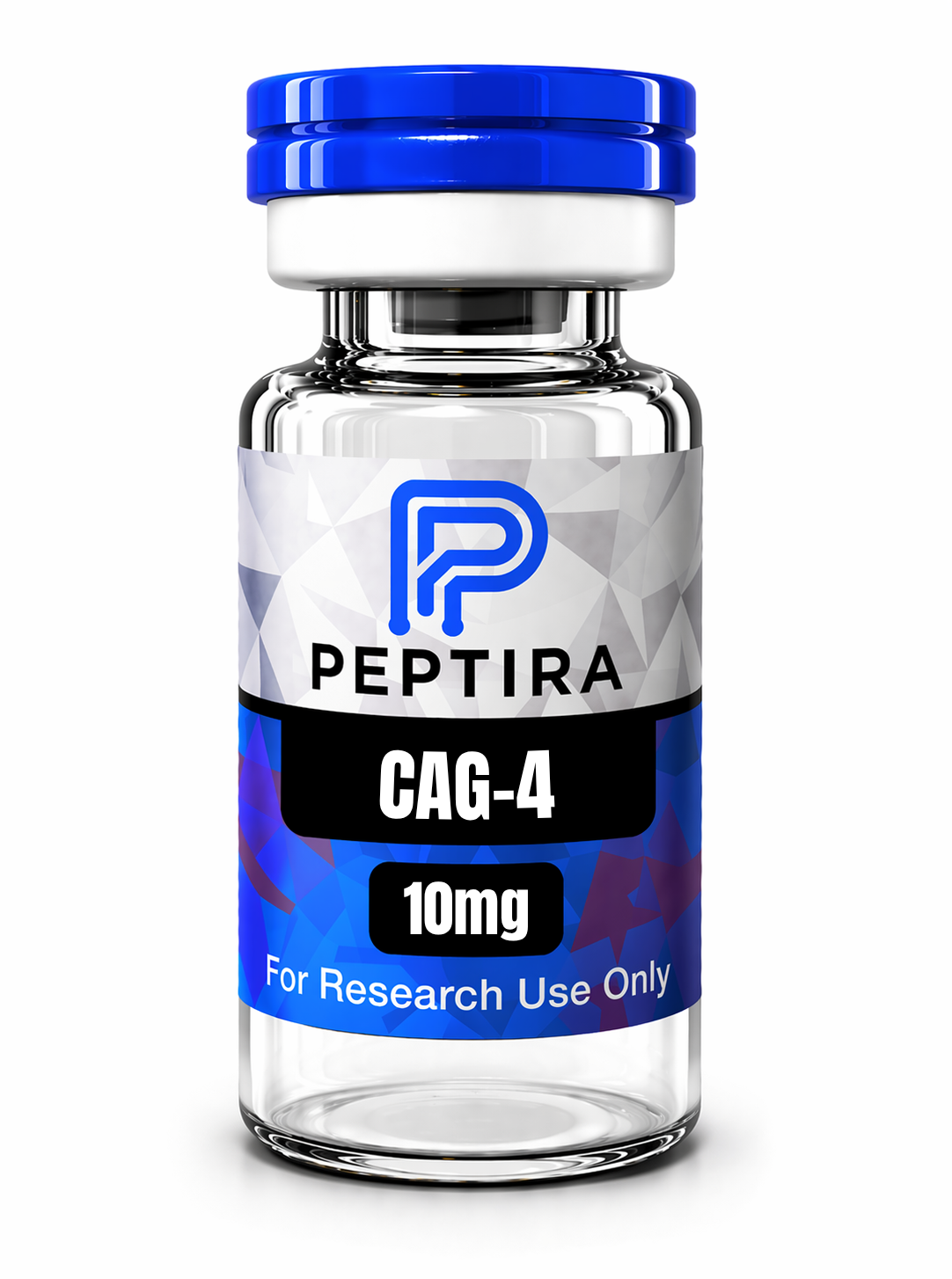
CAG-4
$100.00
CAG-4 (Cagrilintide) is a synthetic, long-acting amylin analogue studied in laboratory and clinical research involving amylin receptor signaling, metabolic pathways, appetite regulation, and energy balance. It is intended for qualified research and analytical applications and is not intended for human or veterinary use.
CAG-4 – Cagrilintide Research Peptide
CAG-4 Peptide Research
CAG-4 is a product code commonly used for cagrilintide, a synthetic, long-acting analogue of the naturally occurring hormone amylin. Cagrilintide has been investigated extensively in metabolic research involving amylin receptor signaling, energy balance, appetite regulation, and related physiological pathways.
Cagrilintide is structurally designed to provide longer-lasting activity than native amylin, making it a useful research compound for studying sustained amylin-related signaling under controlled experimental conditions.
Research Material for Laboratory Applications
CAG-4 is intended for qualified laboratory and analytical research involving peptide chemistry, receptor pharmacology, metabolic signaling, and amylin biology.
Researchers can investigate cagrilintide in controlled experimental systems to examine receptor interactions, molecular activity, pharmacological characteristics, and metabolic signaling pathways.
The CAG-4 designation should be verified against the supplier’s certificate of analysis and product documentation because CAG terminology can be ambiguous across different scientific contexts.
Amylin Receptor Research
Cagrilintide is an analogue of human amylin, a peptide hormone involved in physiological processes associated with post-meal signaling and energy regulation. Research into cagrilintide provides a model for investigating how modified amylin analogues interact with amylin receptor systems.
This makes CAG-4 relevant to laboratory studies involving peptide-receptor interactions, signaling pathways, and the molecular biology of amylin-related systems.
Metabolic Research
Cagrilintide has received significant research attention in metabolic science. Studies have examined its potential role in pathways associated with appetite signaling, energy balance, glucose regulation, and body-weight biology. Cagrilintide has also been investigated alongside incretin-based compounds in combination research.
These research findings should be interpreted according to the specific experimental or clinical study and should not be presented as evidence that a research-grade CAG-4 product is an approved treatment.
Laboratory Research Applications
CAG-4 may be relevant to qualified research involving:
- Amylin receptor signaling
- Peptide-receptor interactions
- Metabolic pathway research
- Energy-balance studies
- Appetite-signaling research
- Peptide chemistry
- Molecular pharmacology
- Analytical peptide characterization
Research outcomes can vary depending on the experimental model, peptide formulation, concentration, analytical method, and study conditions.
Research and Regulatory Context
Cagrilintide remains an investigational compound rather than an FDA-approved medication. Research involving cagrilintide has included clinical investigation of metabolic and weight-related endpoints, but research findings should not be used to characterize a research-grade CAG-4 product as an approved medicine.
CAG-4 should therefore be presented clearly as cagrilintide research material and not as an approved weight-management product.
Laboratory Research Use Only
CAG-4 is offered strictly for qualified scientific and analytical research. It is not marketed as a medication, dietary supplement, or treatment and is not intended for human or veterinary use.
Researchers should handle, store, characterize, and analyze cagrilintide according to appropriate institutional laboratory procedures, applicable safety requirements, and validated analytical protocols.
Important Research Notice
CAG-4 is commonly used as a product designation for cagrilintide. The information presented describes areas of scientific research involving cagrilintide and should not be interpreted as a claim that a particular research-grade product diagnoses, treats, prevents, or cures any disease or medical condition.
Be the first to review “CAG-4”
Related products
Peptides
Peptides
Peptides
Peptides
Peptides
Peptides
Peptides
2 reviews for CAG-4
There are no reviews yet.