
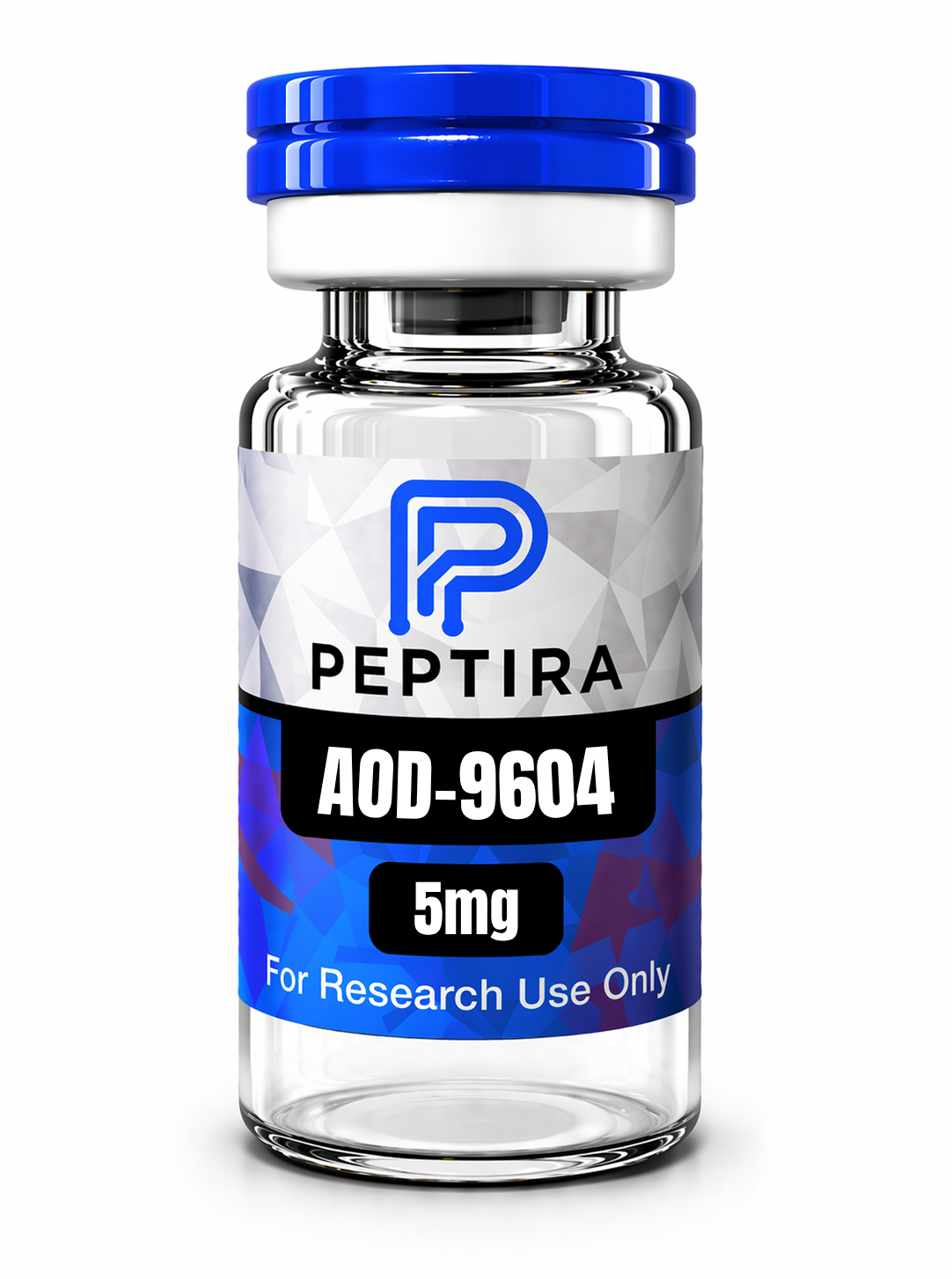
AOD-9604
$42.00
AOD-9604 is a synthetic 16-amino-acid peptide related to the C-terminal region of human growth hormone and studied in laboratory research involving peptide biology, lipid metabolism, adipose-tissue pathways, and molecular signaling. It is intended strictly for qualified laboratory and analytical research and is not intended for human or veterinary use
AOD-9604 – Research Peptide Material
AOD-9604 Peptide Research
AOD-9604 is a synthetic 16-amino-acid peptide related to the C-terminal region of human growth hormone (hGH). It is commonly described in the research literature as a modified hGH fragment containing an N-terminal tyrosine. AOD-9604 has been investigated in laboratory research involving lipid metabolism, adipose-tissue biology, peptide chemistry, and cellular metabolic pathways.
AOD-9604 should be distinguished from full-length human growth hormone. It is a much smaller synthetic peptide and does not represent the complete hGH molecule.
Research Material for Laboratory Applications
AOD-9604 is intended for qualified laboratory and analytical research involving peptide structure, metabolic pathways, lipid biology, and biochemical activity.
Researchers can investigate AOD-9604 under controlled experimental conditions to examine its molecular characteristics, interactions with biological systems, and activity in specific research models.
The material is intended for research purposes only and should not be interpreted as a human dosage or treatment recommendation.
Lipid Metabolism Research
AOD-9604 was originally developed from research investigating the C-terminal region of human growth hormone and its relationship to lipid metabolism. Early laboratory studies examined the effects of related hGH fragments on lipolysis and lipogenesis in adipose-tissue models.
These studies provided a foundation for subsequent investigation of AOD-9604 and its potential biological activity in experimental models.
Metabolic Research
Researchers have investigated AOD-9604 in experimental systems involving adipose tissue, lipid metabolism, and fat oxidation. Preclinical research has examined how the peptide may interact with metabolic pathways without reproducing all of the biological actions associated with full-length growth hormone.
AOD-9604 was subsequently investigated in human obesity research. However, FDA review materials reported that it did not demonstrate a clinically meaningful weight-loss outcome across the trial population.
These findings are important when distinguishing historical research interest from established clinical efficacy.
AOD-9604 and hGH Fragment Research
AOD-9604 is frequently discussed alongside hGH fragment 176–191 because both are derived from the C-terminal region of human growth hormone. However, researchers should verify the exact molecular identity when selecting materials for analytical work because the sequences are not necessarily interchangeable.
For laboratory studies, accurate compound identification is important when evaluating peptide structure, molecular mass, purity, and experimental results.
Research Applications
AOD-9604 may be relevant to qualified laboratory investigations involving:
- Peptide chemistry
- Lipid metabolism research
- Adipose-tissue biology
- Lipolysis and lipogenesis research
- Metabolic pathway studies
- Molecular pharmacology
- Analytical peptide characterization
Experimental outcomes can vary according to the research model, concentration, formulation, analytical method, and experimental conditions.
Regulatory and Research Context
AOD-9604 is not an FDA-approved drug. FDA reviewed AOD-9604 in the context of its history as an investigational obesity compound and noted insufficient evidence supporting inclusion on the applicable compounding bulk-drug list.
Accordingly, research-grade AOD-9604 should be clearly distinguished from an approved pharmaceutical product and should not be marketed as an established weight-management treatment.
Laboratory Research Use Only
AOD-9604 is offered strictly as research material for qualified scientific and analytical applications. It is not marketed as a medication, dietary supplement, or treatment and is not intended for human or veterinary use.
Researchers should handle, store, and analyze AOD-9604 according to appropriate institutional laboratory procedures, applicable safety requirements, and validated analytical protocols.
Important Research Notice
AOD-9604 is intended exclusively for scientific research and analytical purposes. Published experimental findings should not be interpreted as a claim that AOD-9604 diagnoses, treats, prevents, or cures any disease or medical condition.
Be the first to review “AOD-9604”
Related products
Peptides
Peptides
Peptides
Peptides
Peptides
Peptides
Peptides
Reviews
There are no reviews yet.