
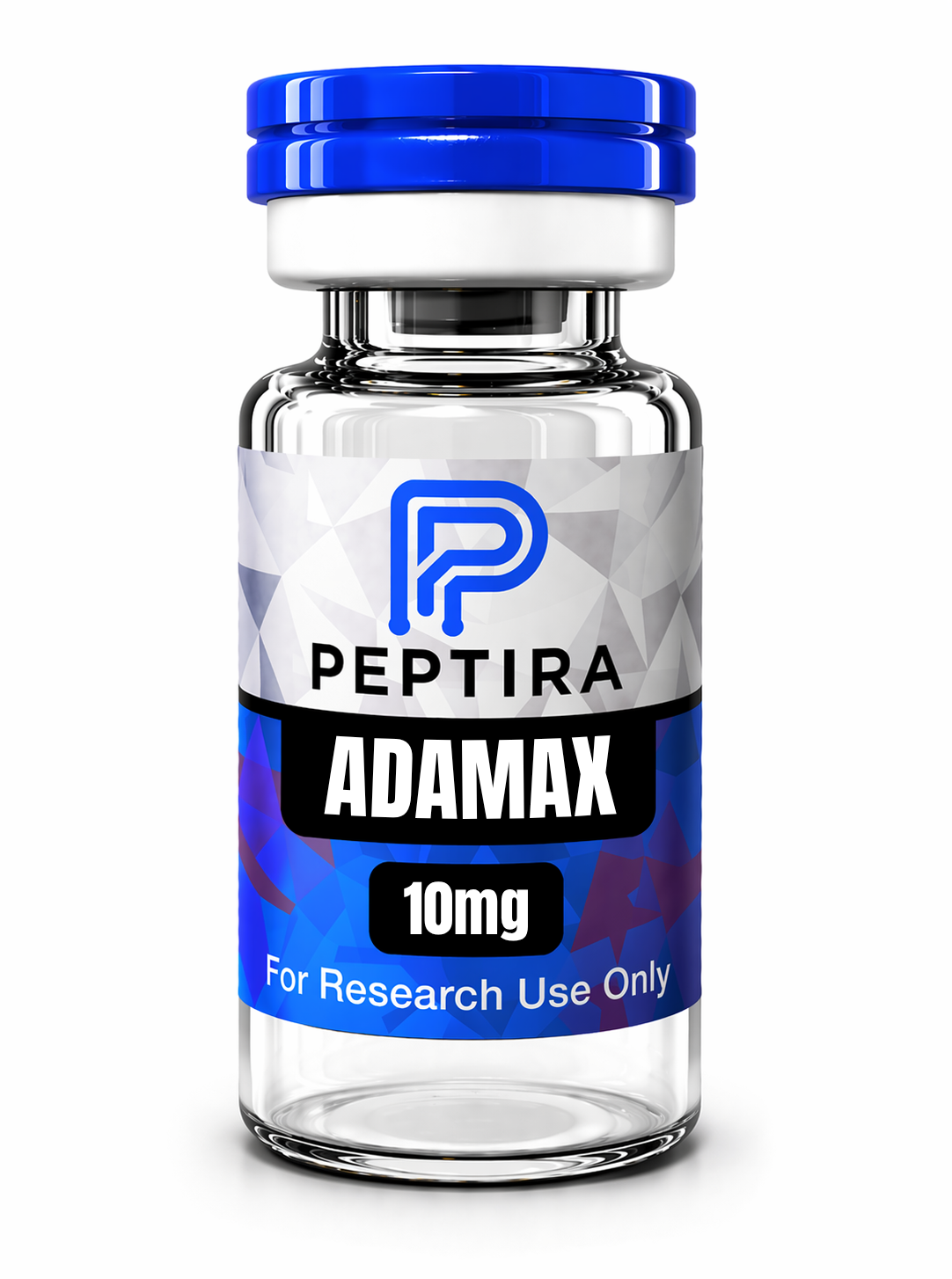
Buy Adamax Peptide online – at Peptira
$53.00
Adamax Peptide is an experimental research peptide commonly described as a modified analogue of Semax. Available product literature associates Adamax with peptide chemistry and neurobiology research, but direct peer-reviewed research on Adamax itself is very limited and its exact identity is not consistently reported across sources. This material is intended for qualified laboratory research only and is not intended for human or veterinary use.
Adamax Peptide Research
Adamax Peptide is an experimental peptide name used within the research-peptide market for a compound described as a modified analogue of Semax. Semax is a synthetic peptide related to the ACTH(4–10) fragment, while Adamax is reported by some sources to contain additional terminal modifications. However, the scientific identity of this is not consistently defined across publicly available sources, making accurate characterization especially important when working with this material.
Peptide Chemistry Research
Research involving Adamax can be approached from a peptide-chemistry perspective, including identity verification, molecular characterization, stability assessment, and analytical testing. Some current catalog descriptions identify Adamax using the sequence Ac-MEHFPGPAG-NH₂, while other sources report different structural descriptions. Researchers should therefore verify the exact sequence and molecular specifications associated with a particular research lot rather than assuming that every product sold under the Adamax name represents the same compound.
Semax-Related Research
This is commonly described as being related to Semax, which has a substantially larger scientific literature. However, findings obtained from Semax should not automatically be interpreted as evidence for Adamax. Structural modifications can change the chemical and biological properties of a peptide, so research involving the parent compound provides context rather than direct evidence for this itself.
Experimental Neurobiology Research
Because Adamax is marketed as a Semax-related experimental peptide, it may be of interest to researchers investigating peptide structure, neurobiology, molecular signaling, and related experimental systems. At present, direct peer-reviewed evidence specifically characterizing this remains limited, and there is insufficient evidence to establish specific biological effects, pharmacokinetics, or safety characteristics for the compound.
Analytical Characterization
Analytical verification is particularly important when working with this because different sources have reported different structures and molecular specifications. Appropriate laboratory characterization may include mass spectrometry, chromatographic analysis, identity confirmation, and other validated analytical techniques suitable for the research objective.
Researchers should compare the analytical documentation for each lot against the exact structure stated on the product documentation before using the material in an experiment.
Research Material
Adamax research material is intended for qualified laboratories conducting scientific and analytical investigations. The material can be relevant to studies involving experimental peptide chemistry, molecular characterization, stability, and Semax-related research.
The absence of extensive direct literature means researchers should distinguish between documented information about this and findings derived from related peptides such as Semax.
Experimental Research Context
Current public sources do not provide a strong body of peer-reviewed experimental research specifically establishing this biological activity or safety. Consequently, claims regarding specific cognitive, neuroprotective, or other physiological effects should not be presented as established scientific findings.
Laboratory Research Use Only
Adamax is supplied as experimental research material for qualified laboratory applications. It is not intended for human consumption, self-administration, diagnosis, treatment, or prevention of disease.
Important Research Notice
This product is intended strictly for research and laboratory use only. Because it is not consistently defined in the available literature, researchers should verify the exact peptide sequence, molecular identity, lot information, and analytical documentation before beginning experimental work. Product specifications should not be interpreted as human dosing or administration instructions.
Be the first to review “Buy Adamax Peptide online – at Peptira”
Related products
Peptides
Peptides
Peptides
Peptides
Peptides
Reviews
There are no reviews yet.