
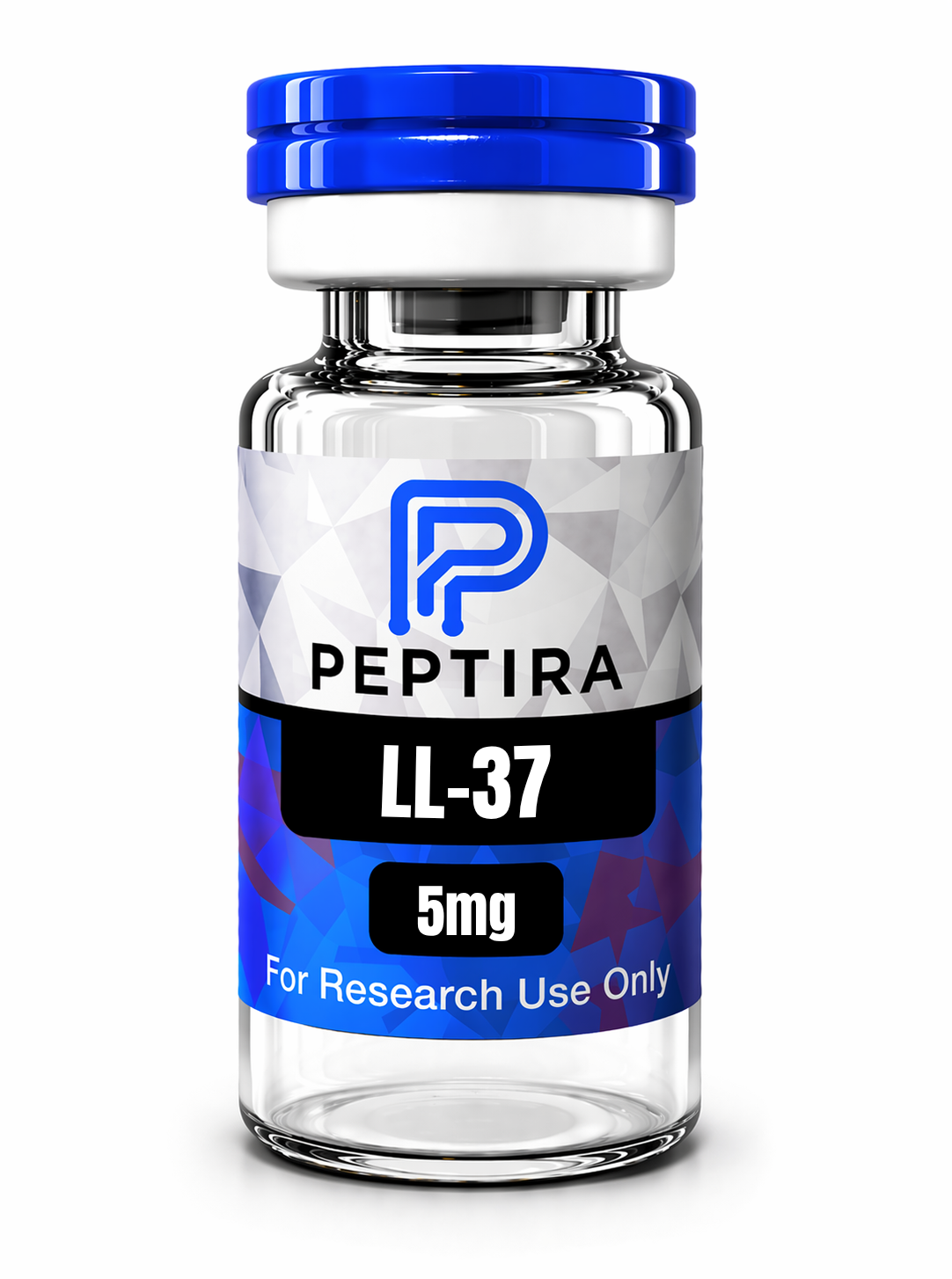
LL-37
$39.00
LL-37 is a 37-amino-acid antimicrobial peptide derived from the human cathelicidin precursor protein hCAP18. It has been extensively studied in research involving innate immunity, antimicrobial activity, inflammatory signaling, cell migration, and host-defense mechanisms. LL-37 is intended for qualified laboratory and analytical research and is not intended for human or veterinary use.
LL-37 – Antimicrobial Peptide Research Material
LL-37 Peptide Research
LL-37 is a naturally occurring 37-amino-acid antimicrobial peptide derived from the C-terminal region of the human cathelicidin precursor protein, hCAP18. It belongs to the cathelicidin family of host-defense peptides and has been extensively investigated in laboratory research involving innate immunity, antimicrobial mechanisms, inflammatory signaling, and cellular responses.
LL-37 provides researchers with an important model for studying how endogenous antimicrobial peptides interact with microorganisms and mammalian cells.
Research Material for Laboratory Applications
LL-37 is intended for qualified laboratory and analytical research involving peptide chemistry, microbiology, immunology, cellular signaling, and host-defense biology.
Researchers can investigate LL-37 under controlled experimental conditions to examine peptide structure, membrane interactions, antimicrobial activity, cellular signaling, and inflammatory pathways.
The product quantity listed on a research product represents the amount of research material supplied and should not be interpreted as a human dosage or administration recommendation.
Antimicrobial Peptide Research
One of the primary areas of LL-37 research involves its antimicrobial properties. LL-37 can interact with microbial membranes, making it an important experimental peptide for investigating host-defense mechanisms and peptide-membrane interactions.
Laboratory studies have examined LL-37 against different classes of microorganisms, including bacteria and other microbial systems. Experimental activity can vary substantially depending on the organism, assay conditions, peptide concentration, medium, and experimental design.
Innate Immunity Research
LL-37 is an important component of the human innate immune system. Research has examined its role in the body’s first-line defense mechanisms and its interactions with immune cells and other components of the local tissue environment.
This makes LL-37 relevant to studies of antimicrobial defense, immune signaling, inflammation-related pathways, and host-microbe interactions.
Cellular Signaling Research
In addition to direct antimicrobial activity, LL-37 has been investigated for its interactions with mammalian cells and signaling pathways. Research has examined its effects on cell migration, cytokine-related signaling, chemotactic responses, and other cellular processes.
These activities make LL-37 a useful research model for studying the relationship between antimicrobial peptides and broader biological signaling networks.
LL-37 and Membrane Interaction Research
LL-37 research frequently focuses on the interaction between cationic peptide structures and negatively charged biological membranes.
Researchers may use LL-37 to investigate membrane disruption, peptide aggregation, lipid interactions, membrane permeability, and mechanisms of antimicrobial peptide activity.
Such studies can contribute to a broader understanding of how peptide structure influences biological membrane interactions.
Laboratory Research Applications
LL-37 may be relevant to qualified research involving:
- Antimicrobial peptide research
- Innate immune signaling
- Host-defense mechanisms
- Peptide-membrane interactions
- Microbiology
- Immunology
- Cellular signaling
- Inflammatory pathway research
- Peptide chemistry
- Molecular biology
- Analytical peptide characterization
Research outcomes can vary according to the experimental model, peptide purity, formulation, concentration, assay conditions, and analytical methodology.
LL-37 and hCAP18
LL-37 is generated from the human cathelicidin precursor hCAP18, also known as CAMP. Processing of the precursor produces the mature LL-37 peptide.
Researchers should distinguish the mature LL-37 peptide from its precursor protein when selecting materials for laboratory experiments. Exact molecular identity, sequence, purity, and analytical specifications should be verified using the relevant product documentation and certificate of analysis.
Research and Scientific Context
LL-37 has been extensively investigated in basic biological research because of its combination of antimicrobial and immunomodulatory properties. However, findings from laboratory and preclinical studies should be interpreted according to the specific experimental system and should not automatically be translated into clinical claims.
Research-grade LL-37 should therefore be presented as an experimental peptide rather than as an established therapeutic product.
Laboratory Research Use Only
LL-37 is offered strictly as research material for qualified scientific and analytical applications. It is not marketed as a medication, dietary supplement, or treatment and is not intended for human or veterinary use.
Researchers should handle, store, characterize, and analyze LL-37 according to appropriate institutional laboratory procedures, applicable safety requirements, and validated analytical protocols.
Important Research Notice
LL-37 is intended exclusively for scientific research and analytical purposes. The information presented describes documented areas of LL-37 research and should not be interpreted as a claim that a particular research-grade product diagnoses, treats, prevents, or cures any disease or medical condition.
Be the first to review “LL-37”
Related products
Peptides
Peptides
Peptides
Peptides
Peptides
Peptides
Reviews
There are no reviews yet.