
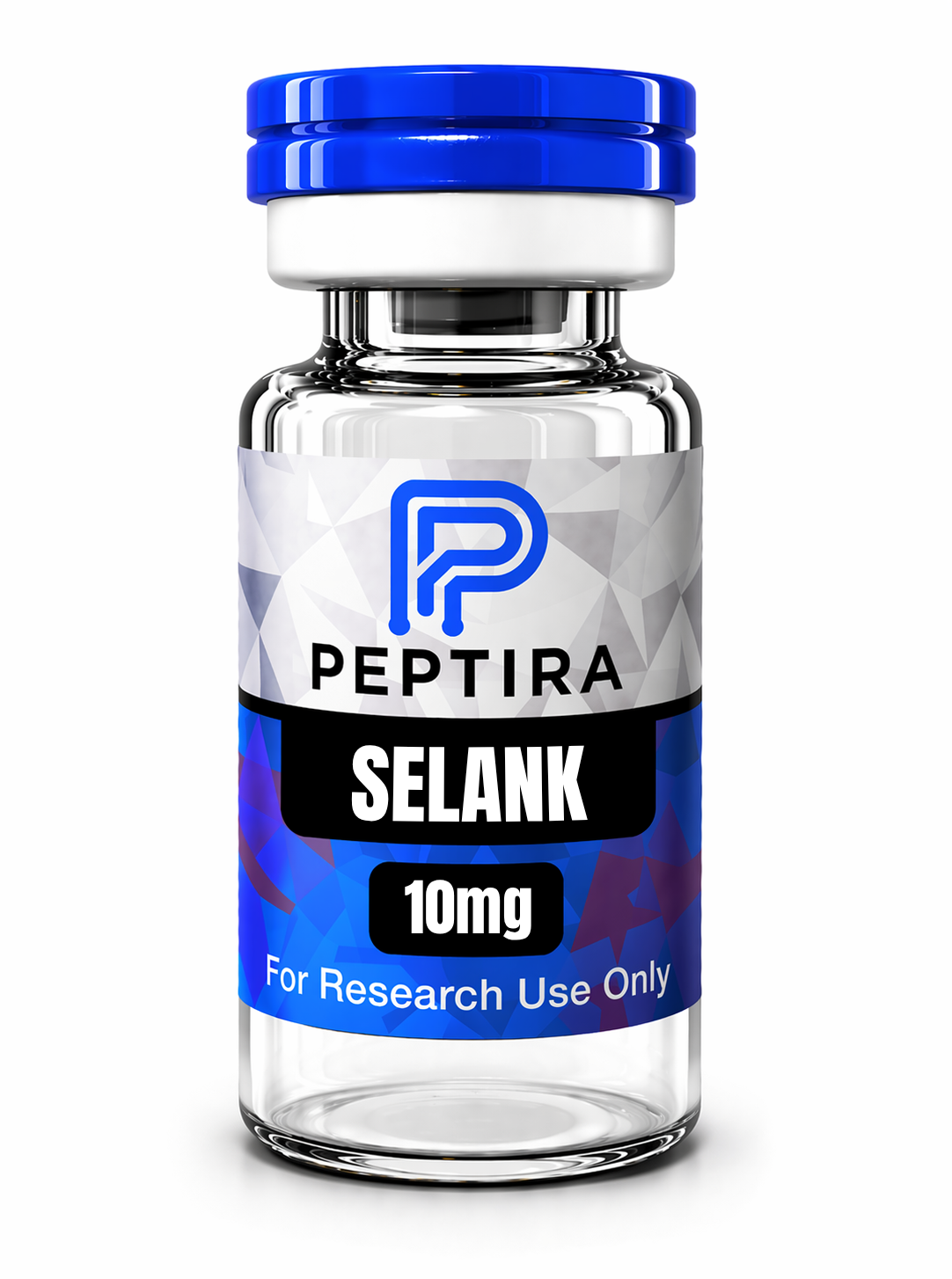
Buy selank peptide online – at Peptira
$41.00
Selank peptide is a research-use-only synthetic heptapeptide composed of the sequence Thr-Lys-Pro-Arg-Pro-Gly-Pro (TKPRPGP). It has been studied in experimental research involving peptide signaling, GABA-related mechanisms, enkephalin metabolism, neurobiology, and immune-related pathways. It is intended strictly for qualified laboratory and analytical research and is not intended for human or veterinary use.
Selank Peptide Research
Selank peptide is a synthetic heptapeptide with the amino acid sequence Thr-Lys-Pro-Arg-Pro-Gly-Pro (TKPRPGP). It has been investigated in laboratory and experimental research involving neurobiology, peptide signaling, enkephalin metabolism, GABA-related mechanisms, and cellular responses. The FDA’s substance database identifies Selank as a peptide with an estimated molecular weight of approximately 752 Da.
Research Material for Laboratory Applications
is intended for qualified laboratory and analytical research involving peptide structure, molecular signaling, neuroscience, and biochemical pathways. Researchers can examine the peptide under controlled experimental conditions to investigate its interactions with biological systems.
Published research has investigated Selank in both animal and human experimental settings. However, the existence of research findings does not by itself establish an approved medical use or demonstrate that research-grade Selank is appropriate for human administration.
GABA-Related Research
One area of scientific interest is Selank’s potential interaction with GABA-related signaling. Experimental molecular research has investigated whether Selank can influence GABA receptor activity through allosteric mechanisms. These studies have contributed to research into how short regulatory peptides may interact with neurotransmitter systems.
Such findings are useful for laboratory investigation of peptide-neurotransmitter interactions, but experimental molecular or animal findings should be interpreted within the limitations of the particular research model.
Enkephalin and Peptide Signaling Research
Researchers have also investigated Selank in relation to enkephalin metabolism. Experimental work has reported inhibition of enzymes involved in the degradation of enkephalins, providing a potential mechanism for studying interactions between short peptides and endogenous neuropeptide systems.
This makes Selank relevant to laboratory research examining peptide metabolism, neurochemical signaling, and mechanisms involving endogenous opioid-related pathways.
Experimental Neurobiology and Immune Research
Additional studies have examined Selank in experimental models involving anxiety-related behavior, neurotransmitter systems, and immune signaling. Research has reported changes in cytokine-related measurements and other biological markers under specific experimental conditions.
These findings provide areas for scientific investigation but should not be presented as evidence of established therapeutic effectiveness.
Regulatory and Safety Context
Selank should be distinguished from FDA-approved pharmaceutical products. FDA materials currently identify Selank acetate (TP-7) among substances for which the agency has noted potential concerns involving peptide aggregation, impurities, and limited information regarding safety in humans.
Accordingly, research material should be used only within appropriate qualified laboratory environments and according to applicable institutional procedures.
Laboratory Research Use Only
This is offered strictly as research material for qualified scientific and analytical applications. It is not marketed as a medication, dietary supplement, or treatment and is not intended for human or veterinary use.
Researchers should handle, store, and analyze it according to appropriate laboratory procedures, institutional safety requirements, and validated analytical protocols.
Important Research Notice
The information presented describes areas investigated in published this research. It should not be interpreted as a claim that this diagnoses, treats, prevents, or cures any disease or medical condition. Experimental outcomes can vary depending on the research model, concentration, formulation, analytical method, and study conditions.
Be the first to review “Buy selank peptide online – at Peptira”
Related products
Peptides
Peptides
Peptides
Peptides
Peptides
Peptides
Reviews
There are no reviews yet.