
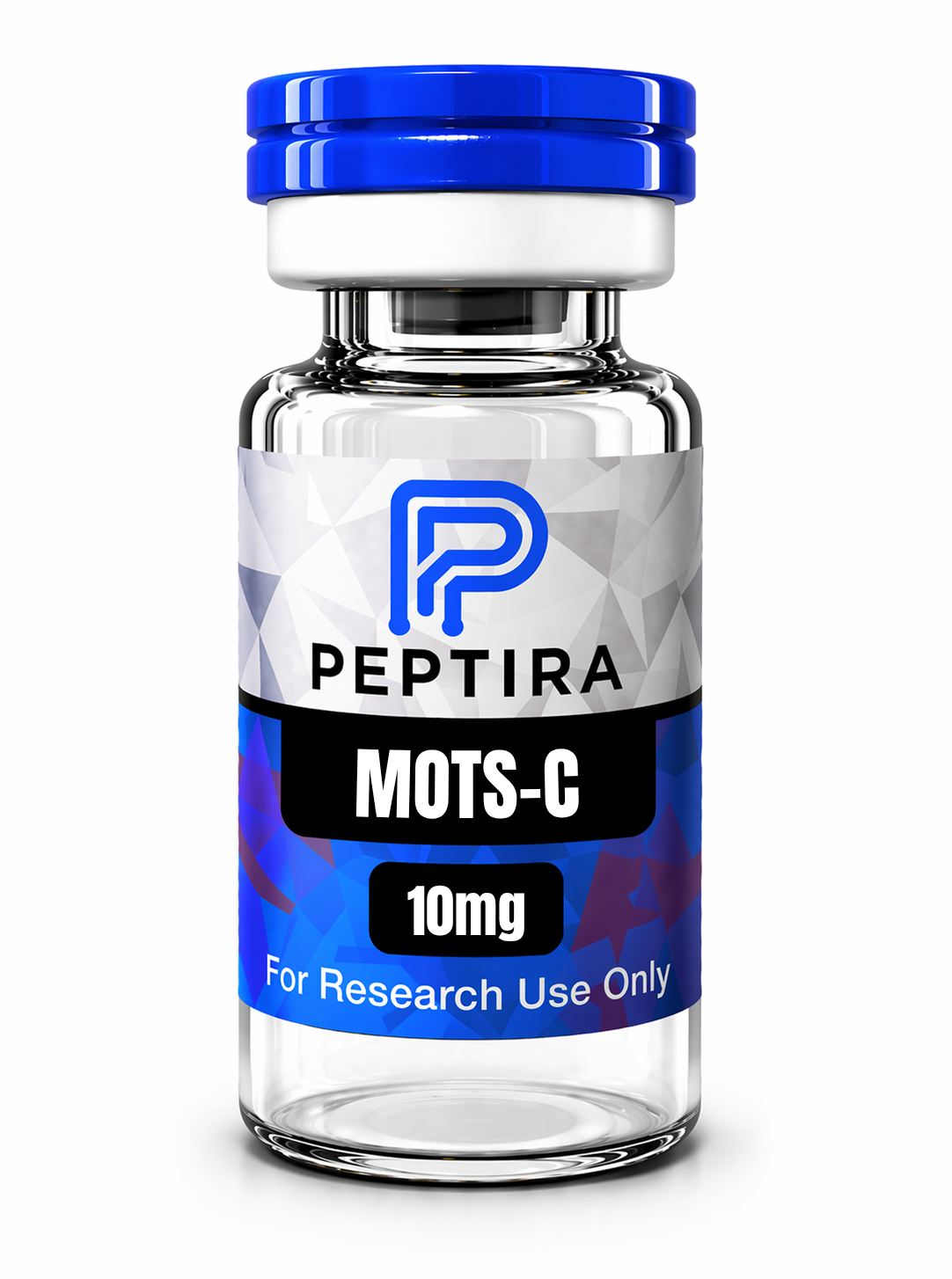
MOTS-C 10MG


$40.00
MOTS-C 10MG is a research-use-only material containing MOTS-c (mitochondrial open reading frame of the 12S rRNA-c), a 16-amino-acid mitochondrial-derived peptide studied in research involving cellular metabolism, mitochondrial signaling, stress responses, and energy regulation. It is intended exclusively for qualified laboratory and analytical research.
MOTS-C 10MG – Mitochondrial-Derived Peptide Research Material
MOTS-C 10MG is a research-use-only material containing MOTS-c, also known as mitochondrial open reading frame of the 12S rRNA-c. MOTS-c is a naturally occurring 16-amino-acid peptide encoded within the mitochondrial genome. It has become an active subject of scientific research because of its relationship with mitochondrial signaling, cellular metabolism, and stress-response pathways.
MOTS-c Research
MOTS-c is classified as a mitochondrial-derived peptide (MDP). Research has examined its role in communication between mitochondria and the nucleus and its involvement in cellular responses to metabolic and environmental stress.
Scientific literature describes MOTS-c as a peptide that can influence gene regulation and cellular responses under certain stress conditions. Researchers continue to investigate its molecular mechanisms and biological characteristics in controlled laboratory models.
Research-Grade MOTS-c Material
MOTS-C 10MG is presented as a research material for qualified laboratory and analytical applications. It can be used as a research subject in investigations involving mitochondrial biology, peptide chemistry, cellular signaling, metabolic pathways, and stress-response mechanisms.
Researchers should establish appropriate experimental methods, analytical procedures, storage conditions, and handling protocols according to their laboratory requirements, institutional procedures, and applicable regulations.
Mitochondrial-Derived Peptide Research
MOTS-c is encoded from a region within the mitochondrial 12S rRNA gene. Its mitochondrial origin distinguishes it from many conventional peptides encoded by nuclear DNA and has contributed to growing interest in mitochondrial-derived peptides as regulators of cellular processes.
Research has explored the relationship between MOTS-c and metabolic homeostasis, oxidative stress, mitochondrial function, and cellular adaptation. These areas remain active fields of investigation.
MOTS-c and Cellular Signaling
One area of MOTS-c research focuses on its movement between cellular compartments and its potential role in communication between mitochondria and the nucleus. Experimental research has reported that MOTS-c can translocate to the nucleus under certain stress conditions, where it may influence the expression of genes involved in cellular responses.
More recent research has also investigated MOTS-c in immune and inflammatory pathways. A 2026 study reported evidence of mitochondrial-encoded MOTS-c participating in host-defense and immunomodulatory processes in experimental models.
Current Research Evidence
The scientific literature surrounding MOTS-c includes cell-based, animal, and human observational research. Studies have investigated circulating MOTS-c levels and its association with exercise, metabolic proce
Be the first to review “MOTS-C 10MG”
Related products

Peptides


Peptides
Peptides


Peptides

Peptides
Peptides
Reviews
There are no reviews yet.